Three-card tarot spreads: choose roles and connect the reading
Three cards can describe a development, examine a difficulty or compare two options. Learn to choose the roles your question needs, read the cards in order and connect them into an interpretation you can explain.
Start here
You want to read three cards but are unsure what each should do.
Name the task first: understand a development, examine a difficulty or compare two actions. Use the layout table to choose three roles, then follow the complete Clarity example.
Match the three roles to your taskOrara editorial · Updated · Our approach
On this page
Choose what the three cards will examine
A spread is a layout of cards. A position gives a card its role: the particular question it addresses. Three cards give you three related perspectives; their order does not automatically mean past, present and future.
Choose the task before drawing. Timeline examines a situation over time, Clarity connects a difficulty to a response, and Decision compares two actions you can actually take. These are Orara’s layout names. The linked guides at the end explain each one in more depth.
| Layout | Roles in order | Choose it when you want to… |
|---|---|---|
| Timeline · Past–Present–Future | Past · Present · Future | Connect an earlier influence and the present to a possible direction. |
| Clarity · Situation–Obstacle–Advice | Situation · Obstacle · Advice | Examine one difficulty and a response within your control. |
| Decision | Option A · Option B · What matters most | Compare two named actions using a shared criterion. |
Give one question and its facts to the layout
In this invented example, you are making table labels for a small book swap. The organiser supplied ten confirmed category names and asked for plain, readable labels. Six are finished; four remain. Paper, a pen and the list are available. You have a 20-minute work period. You have also started sketching a poster and a welcome card, although neither is required.
Ask: “What is making these labels hard to finish, and what could help?” Clarity fits because it gives the situation, difficulty and response separate roles. You are not comparing two available paths or tracing a change over time. Keep Situation, Obstacle and Advice in that order.
Follow the selected cards below without a deck. For your own physical reading, write the role names left to right before shuffling and place three cards in that order. This first method uses upright cards, with the pictures the normal way up. A reversed card is upside down; you can leave that variation for later. Choose the upright convention before drawing and turn the cards that way.
For an unfamiliar card, open its linked name or use your deck’s guidebook. Read the upright meaning and choose one theme you can explain through the picture, role and facts. You can use a reference throughout; memorising three definitions is not the goal.
Read each role, then make the connection
In Clarity, Situation describes what you are dealing with, Obstacle examines friction and Advice suggests a possible response. Keep those jobs distinct. The response should address the difficulty you identified in this situation, using the time and resources actually available.
- Look at the first card’s picture, check one reference theme and write a sentence answering Situation.
- Read the second card through Obstacle. Explain how that theme could complicate the situation, and which fact supports the connection.
- Read the third card through Advice. Choose a response that respects the known limits.
- Connect the three sentences: this situation meets this difficulty, so this response may help. Name a reason the interpretation might not fit.
- Before acting, record the cards, roles and response. Set a review point, then add what happened without replacing your original note.
See Clarity applied to the unfinished labels
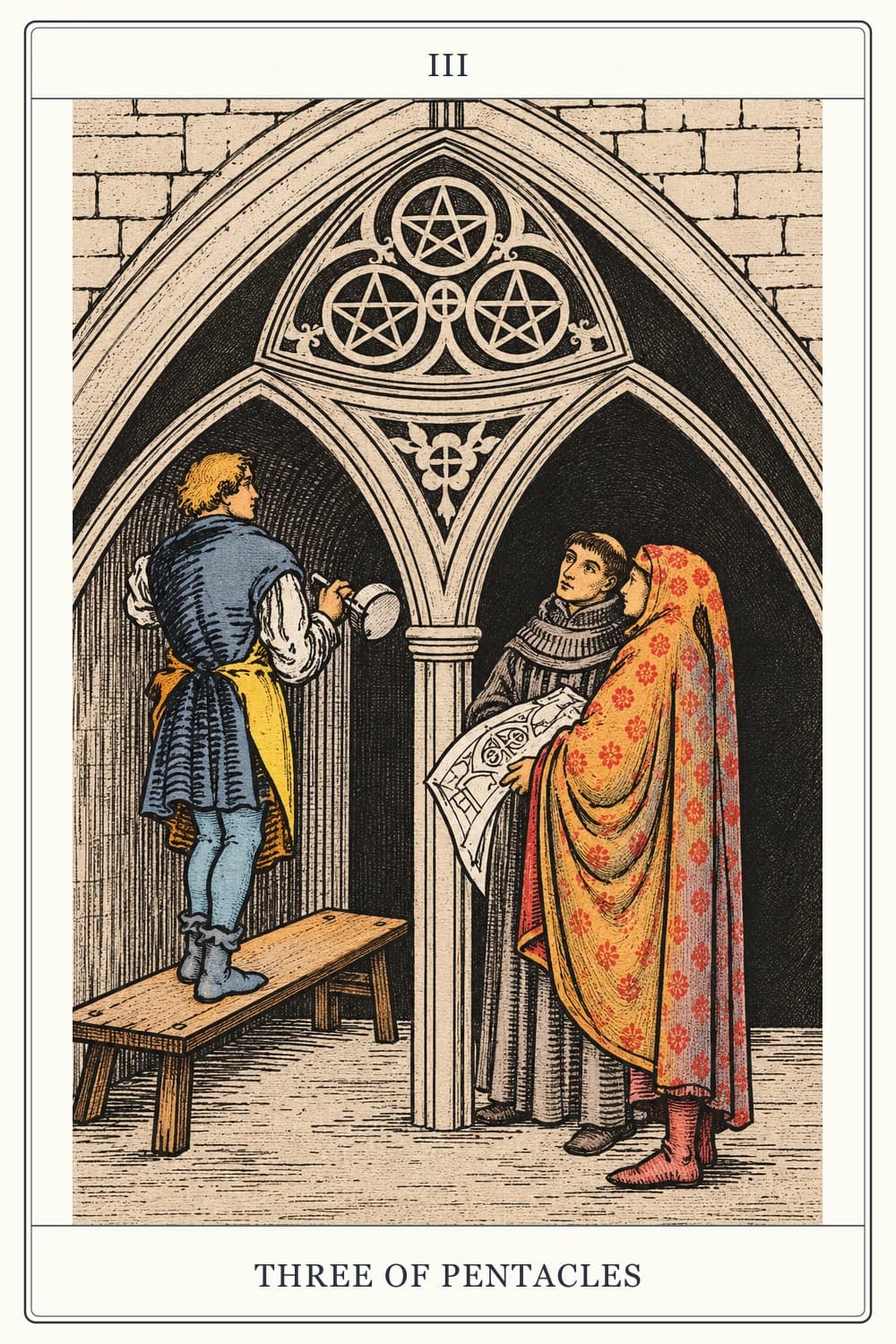
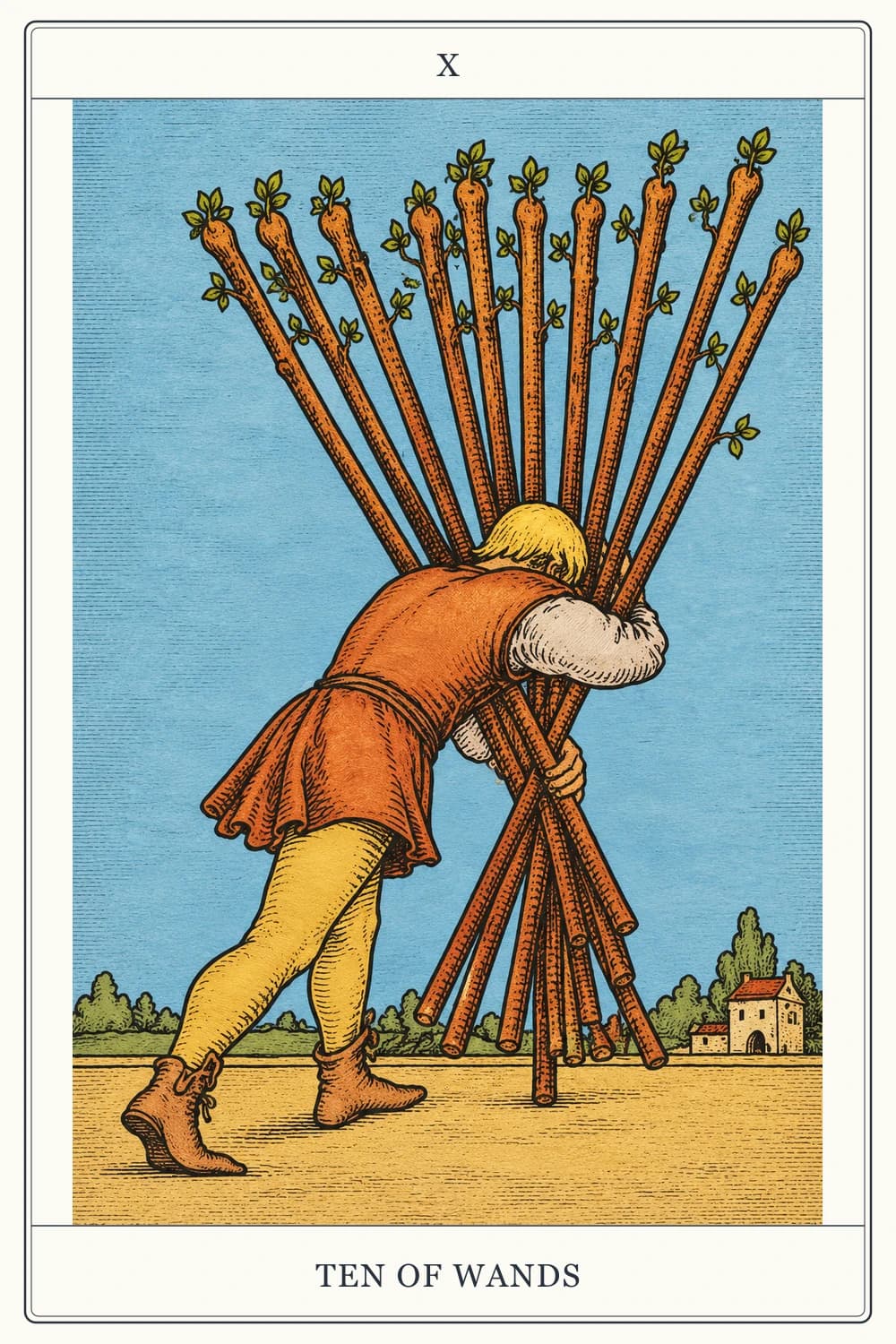
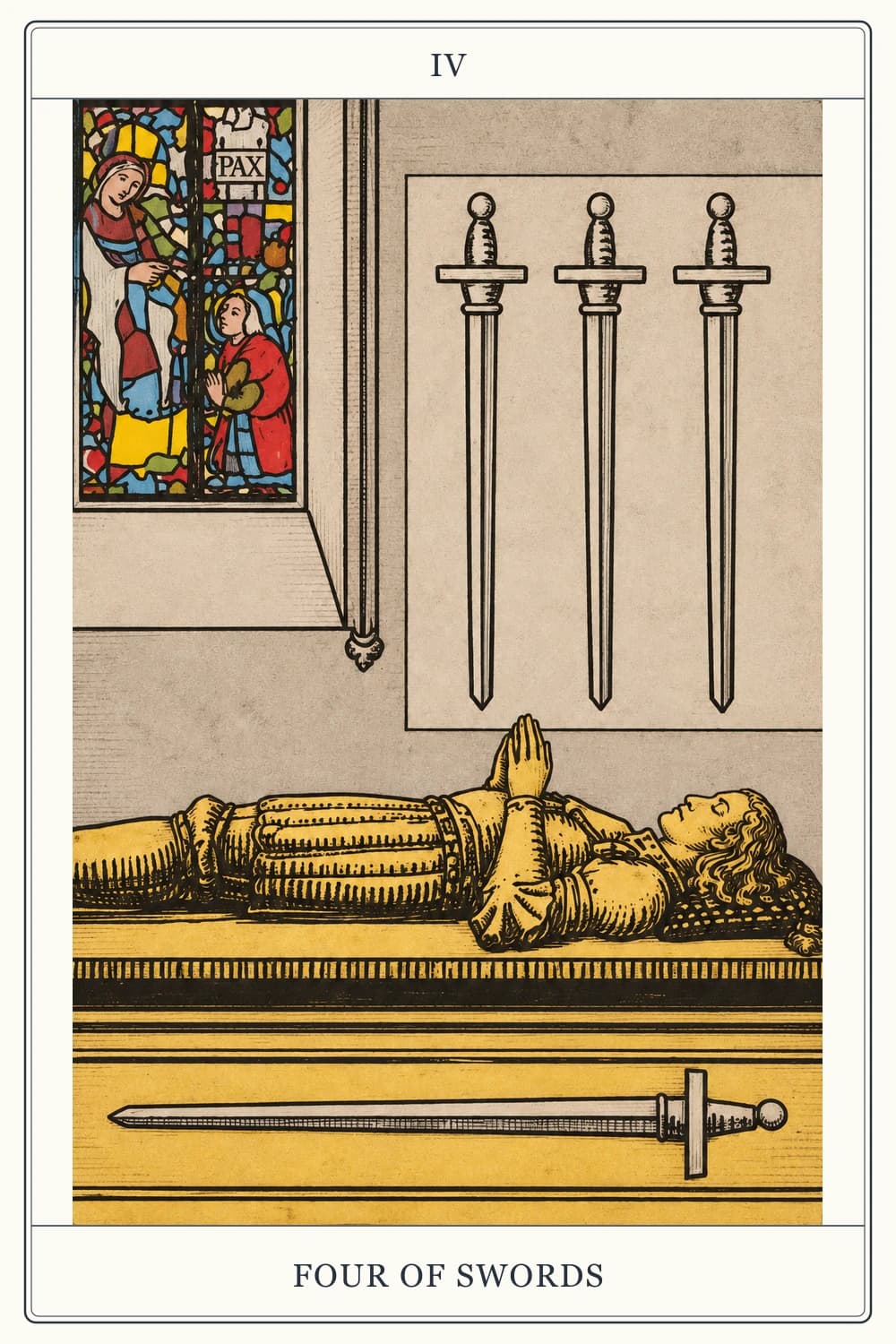
These three upright cards are chosen to illustrate the label question, rather than drawn for you. Read the supplied facts beside them. The organiser’s list, remaining labels and available time are known before any interpretation.
Situation — Three of Pentacles. One person stands on a bench with a tool while two others face them, one holding a drawing. Teamwork and planning are reference themes. Here: “My labels are one part of an agreed plan for the swap.” The organiser supplied the categories, and you are preparing the labels. This describes the shared task; it does not establish that someone is available to help during these 20 minutes.
Obstacle — Ten of Wands. A figure bends forward carrying ten long poles. Burden and overextension are reference themes. Here: “The extra poster and welcome card are competing with the four required labels.” Those additions come from the stated context. The card offers a way to examine their demands rather than proving that the whole event is too much for you.
Advice — Four of Swords. A figure reclines beneath three swords, with another sword below. Rest and contemplation are reference themes. Here: “Pause briefly to check the essential task, then return to the labels.” You could use two minutes of the 20-minute period to set aside the optional sketches and identify the four missing names. Use the remaining time for plain labels, checking their names against the list and whether you can read them clearly.
Connected reading: “I am contributing labels to a shared plan, but optional extras are dividing the work; a brief pause to reset priorities could help me focus on the four required labels.” This explains how Advice responds to Obstacle within Situation. It is more specific than listing “teamwork, burden, rest”.
A longer break is another possible use of Four of Swords, but it would leave less of this work period. The brief review fits the stated task without assuming more time afterward. If you needed to stop working, record the unfinished labels instead of claiming that a pause must lead to completion.
Record the response and check the result
An initial note could read: “Question: What is making these labels hard to finish, and what could help? Selected upright example: Three of Pentacles / Situation; Ten of Wands / Obstacle; Four of Swords / Advice. Six of ten labels done; optional sketches started; 20 minutes available. Reading: extras are dividing the task. Response: take two minutes to identify the four remaining names, then work on plain labels. Review at the end: what is complete and checked?”
An illustrative later note: “I set aside the poster and welcome card, wrote the four remaining labels and compared all ten with the organiser’s list. All names matched, and I could read each label clearly. The extras remain unfinished. I have not yet checked how visitors read the labels at the event.” The result supports the limited action you tried. It does not show that the event will run smoothly or that every task benefits from the same pause.
If only two labels had been completed, record two remaining. A useful review can show that the task needed more time. Keep the original interpretation and the observed result separate rather than changing the note to make the reading appear successful.
Reading worksheet
Three-card reading record
Date, question and known facts:
Layout and roles chosen before drawing:
Cards, orientations and selection method:
First role: picture detail, theme and context sentence:
Second role: picture detail, theme and context sentence:
Third role: picture detail, theme and context sentence:
How the three role sentences connect:
Another plausible reading or reason it may not fit:
One response within available time and resources:
Review point and what I will check:
Later: what happened, including unfinished work:
What remains unknown or needs revising:
Optional: give the same card a different job
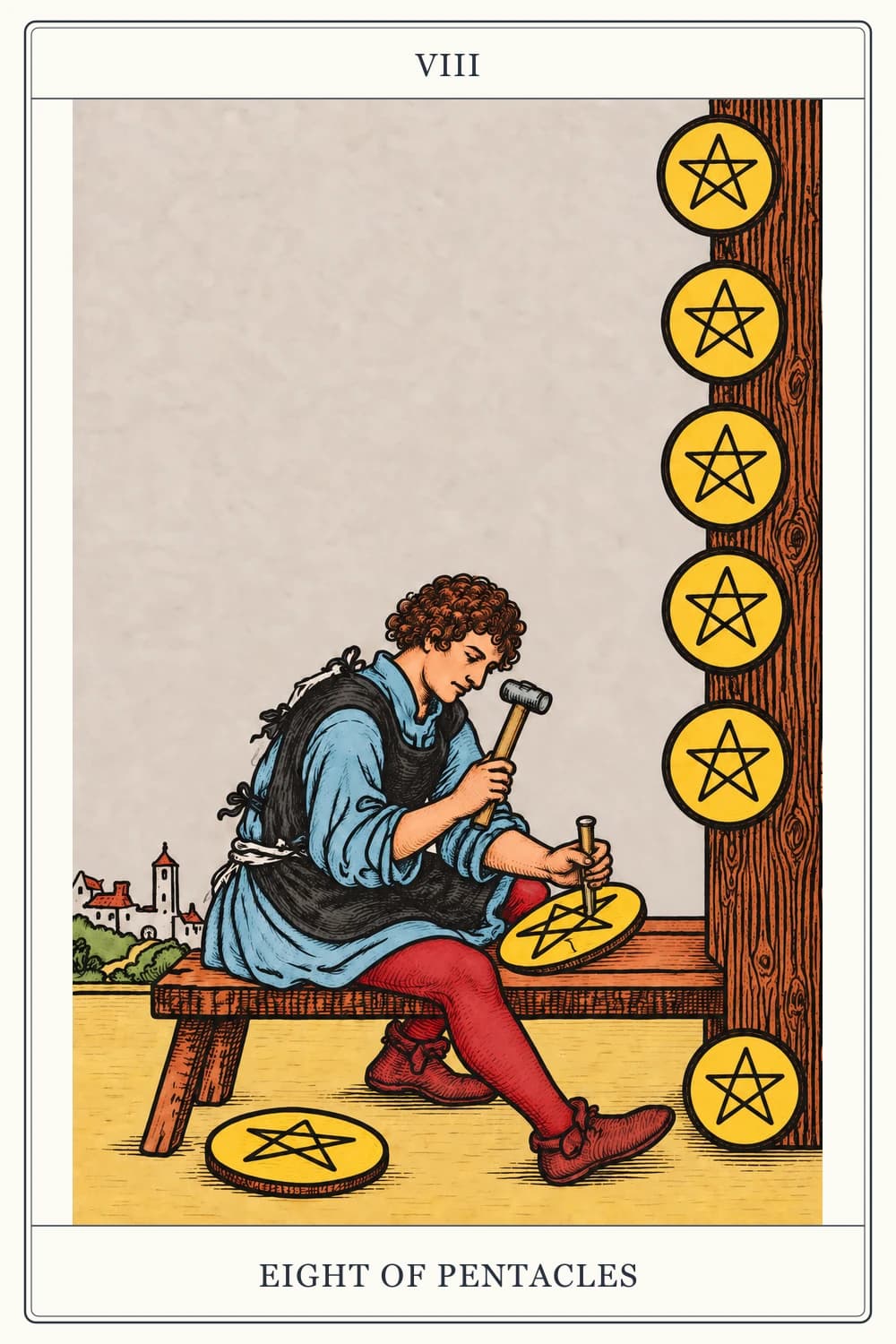
Return to the original moment: six labels finished, four left and optional sketches started. For this separate comparison, use the selected upright Eight of Pentacles. A craftsperson works on a star-marked disc, with similar discs beside them. The discs are called pentacles. Diligence and attention to detail are reference themes.
The table tries the same card in different roles. It is not a reading with three copies of the card, and it does not replace the Clarity example above. A role changes the question you ask of the theme. Known facts still decide whether a particular answer fits.
| Assigned role | A possible interpretation | Check it against the label facts |
|---|---|---|
| Past · in Timeline | Careful work has already produced part of the task. | Six finished labels support this account of earlier work. |
| Obstacle · in Clarity | Is extra polishing of the labels delaying completion? | No label-polishing is stated here. The known extras are the poster and welcome card, so do not assert this explanation. |
| Advice · in Clarity | Repeat the plain format carefully for the remaining names. | Paper, pen, list and four remaining labels make this a response you could try. |
Optional practice
Keep Eight of Pentacles in Advice, but change the facts: the organiser now wants all ten labels to use a new category list. You cannot obtain the list during the 20-minute period. What changes in the response, and what must remain unfinished?
See one possible answer
Careful repetition now needs a verified reference first. Do not copy the old names and call the new task complete. You could set out blank paper and record that all ten names, including the six already written, need checking against the updated list. The new wording remains unresolved until the list is available. The card does not supply category names, a helper or extra time.
Check a mismatch before trying another layout
If you have three definitions without a connection, return to the roles and write how they relate. If the explanation invents a fact, remove it. A theme can feel plausible without fitting this case, as the label-polishing interpretation shows. You can leave a card unresolved rather than drawing again to obtain a preferred story.
Keep the role names fixed during a reading. In Timeline, Future examines a possible direction under stated conditions; it is not automatically Advice. In Decision, What matters most supplies a criterion for both options rather than choosing the winner. You can decide on a response after considering either layout without renaming the third position.
For your own attempt in Orara, the main action below opens the spread chooser. Select Familiar · 3 cards to see three-card layouts. Choose Clarity to try the method above, or Timeline or Decision when its task fits better. In setup, clear Include reversed cards to follow this upright method. Enter a question if useful and use Draw 3 cards. Keep the reading record in your notes; the teaching cards and worksheet are not preloaded.
Common questions
- Do I need three different suits or a Major Arcana card?
- No. Suits are the four card families: Wands, Cups, Swords and Pentacles; Major Arcana are the deck’s 22 named theme cards. A three-card reading can contain any mix. Read the cards you drew in the roles you assigned rather than replacing them to obtain a particular mix.
- Can I use an open question?
- Yes. A focus such as “What deserves attention in this task?” can work with Clarity when you also name the task and known facts. In Decision, still identify two real actions; otherwise the option roles have nothing concrete to compare.
Sources and further reading
External references for these reading methods. Orara created the examples on this page.
- Joan Bunning — Lesson 8: ordered positions, card references and a summary
- Joan Bunning — Three of Pentacles: teamwork and planning
- Joan Bunning — Ten of Wands: burden and overextension
- Joan Bunning — Four of Swords: rest and contemplation
- Joan Bunning — Eight of Pentacles: diligence and attention to detail