Past, Present, Future tarot spread: a complete example
A Future card can be the hardest part of a Timeline reading to explain. Follow a return to language study to see how a remembered influence and a present constraint shape a possible direction — and how to check that interpretation later.
Start here
You want to read Future without turning it into a promise or an instruction.
In the language-study example, identify what time is actually available. Follow that constraint through the three cards, then ask which part of the Future sentence would need revising if the time disappeared.
Follow the language-study exampleOrara editorial · Updated · Our approach
Timeline at a glance
- Past
- Present
- Future
Use when: Where this came from and where it may be heading if nothing changes.
Choose another approach if: Two named options to compare, or a pure what-should-I-do question.
Example questions
- What is unfolding in this connection if nothing changes?
- What from the past is still shaping how I show up here?
- What would help me understand this relationship more clearly?
On this page
What the three positions ask
A spread is a layout that gives each card a role, called a position. In Past–Present–Future, the three roles describe one situation over time. Orara calls this layout Timeline. This guide uses it for reflection: the cards offer themes to consider, while your experience supplies the facts.
Lay the cards left to right as Past, Present and Future. Past gives context for Present; Present helps you assess which Future interpretations are plausible. The order does not prove that one event caused another.
| Position | Question to ask | Keep the boundary clear |
|---|---|---|
| 1 · Past | What earlier influence still matters? | Use a memory you can identify; leave unknown history unknown. |
| 2 · Present | What is active in the situation now? | Connect the theme to current circumstances. |
| 3 · Future | Where could the current pattern lead? | Name the conditions behind that possibility; no guaranteed event or date. |
Choose the question before drawing
Use a question about a developing situation: 'What is shaping my return to language study over the next month?' or 'How has my approach to this project changed, and where might it lead?' A month sets the period you want to examine. It does not make the third card a forecast for the last day of that month.
Write down what happened earlier and what you know now. If your main question is 'What should I do about this obstacle?', the Situation–Obstacle–Advice layout, called Clarity in Orara, gives a response its own position. In Timeline, first describe a possible direction; decide what to do afterward.
Prepare an upright-only reading
You can follow the example without a deck. For your own attempt, use three upright cards, with the pictures the right way up. A reversed card is upside down and may use a different interpretation; this lesson leaves that variation aside.
With a physical deck, choose this convention before shuffling, take three cards without looking and place them upright in the assigned order. In Orara, open Timeline, uncheck 'Include reversed cards', then use 'Draw 3 cards'. Keep your question in your notes or enter it in the optional question field.
For each card, notice a visible detail, find a conventional meaning, then explain how it answers its position using your known facts. Your deck's guidebook or Orara's card library can supply the meanings. The example below includes the ones you need to follow it.
A complete example: returning to language study
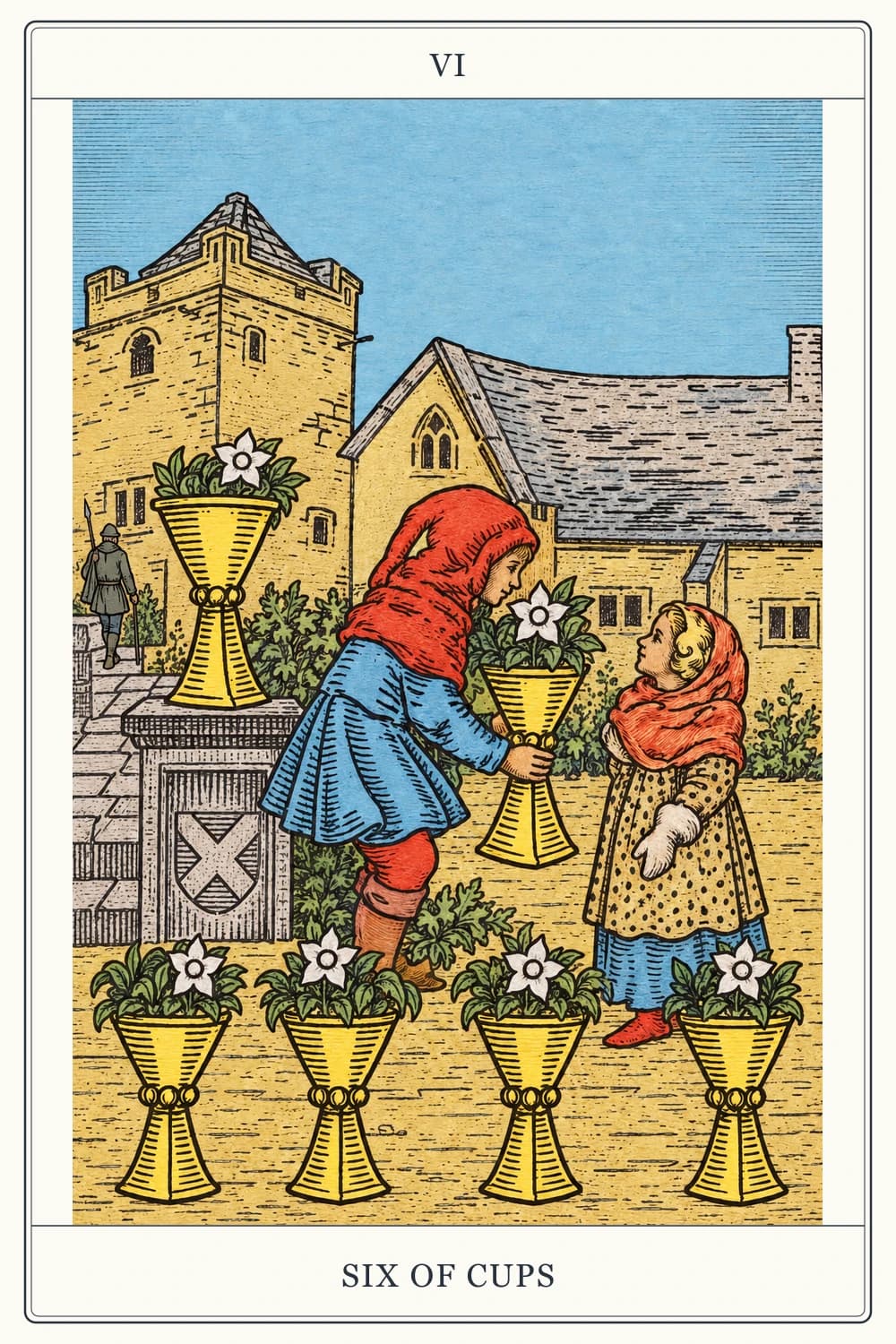
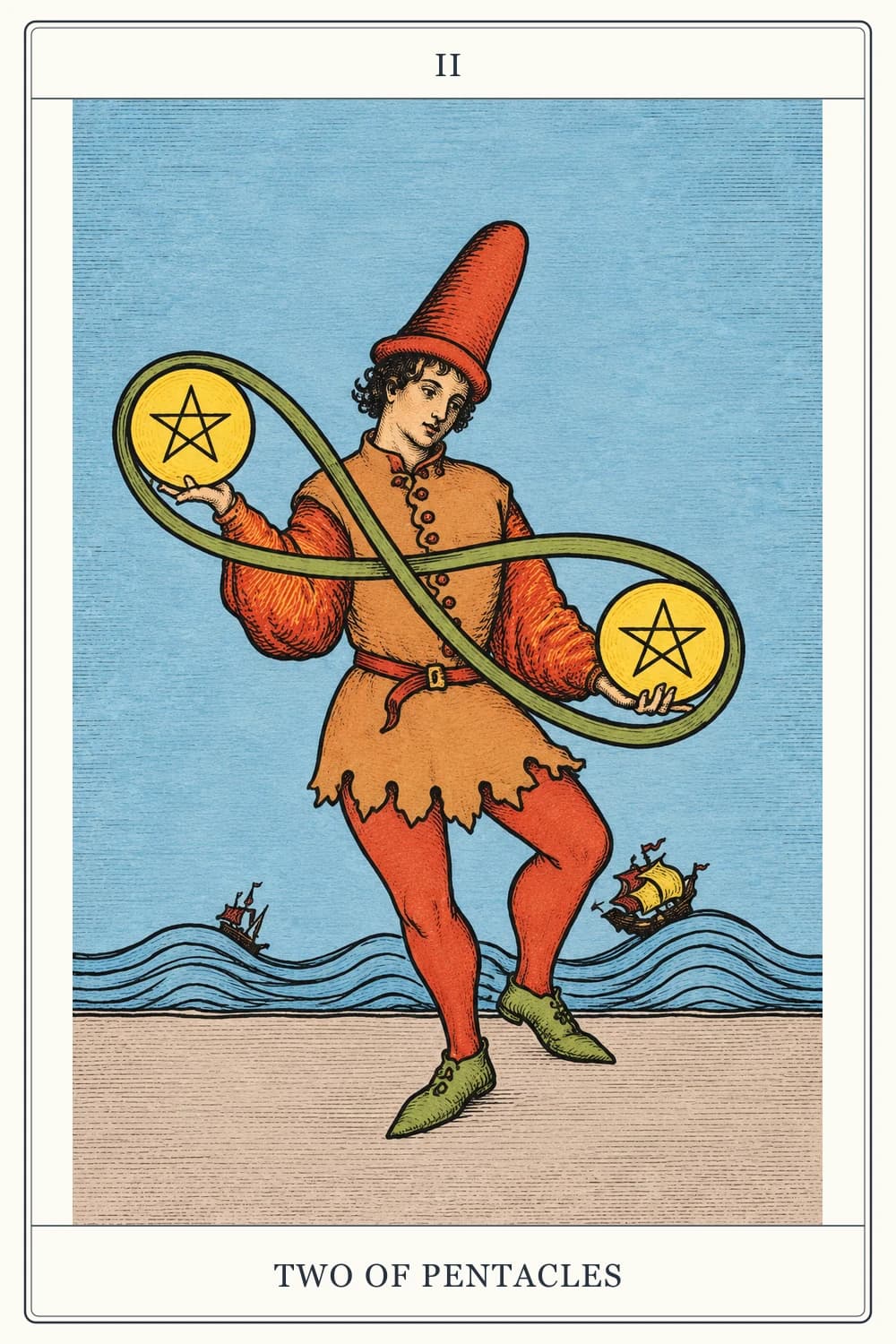
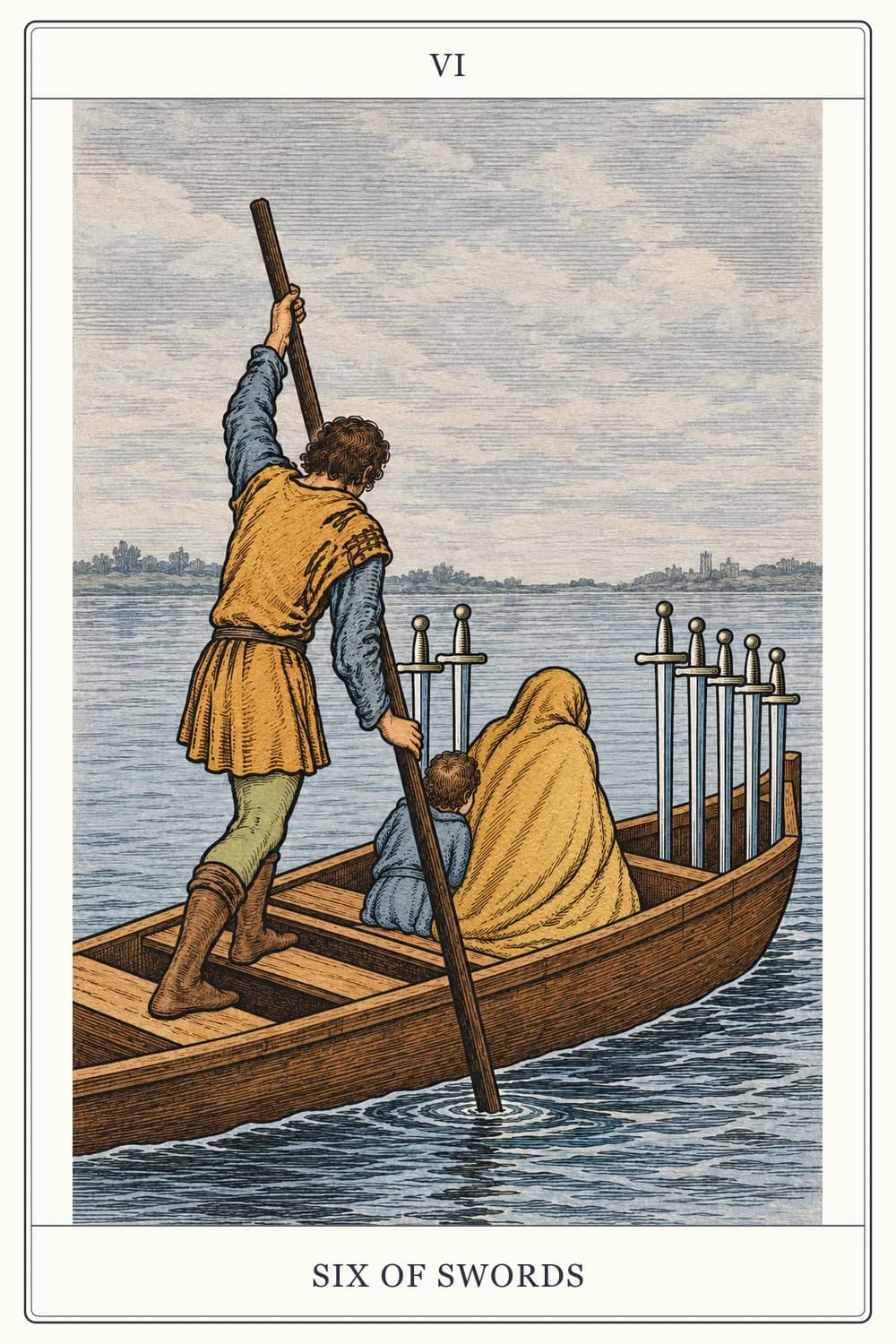
Question: 'What is shaping my return to language study over the next month?' You enjoyed a conversation group in the past. Last week you studied a saved audio lesson for twenty minutes on Tuesday, but a work deadline took Thursday's planned session. This week Tuesday has another twenty-minute opening; Thursday is still uncertain. You have not checked whether the old group still meets.
These three upright cards were chosen to illustrate the method, not drawn for you or taken from a user's history. Keep the facts above beside the pictures: they will help us choose among meanings without inventing extra time or a waiting conversation partner.
Past — Six of Cups: remembered enjoyment
One child offers another a cup filled with flowers. Conventional associations include kindness, simple enjoyment and nostalgia. In Past, the nostalgia theme fits your remembered enjoyment of the conversation group: 'An enjoyable shared experience is part of why I want to return.'
That sentence uses a memory already in the question. It does not tell you whether you now miss the language, the company or both. Keep that distinction open: recreating the old schedule would not necessarily recreate what you valued about it.
Present — Two of Pentacles: competing commitments
The figure holds two star-marked discs within a looping ribbon; ships ride waves behind them. Balancing demands and adapting to change are conventional associations. Your completed Tuesday session and missed Thursday give those themes a concrete setting.
A position sentence is: 'Study has restarted, but the two-session plan depends on time I cannot reliably protect.' This describes the current arrangement. Calling you disorganized would add a judgment the facts do not support: a work deadline can interrupt even a careful plan.
Future — Six of Swords: a possible transition
A standing figure guides a boat carrying two passengers and six swords. Conventional meanings include moving through a difficult period and a change of scene or outlook. Here, the crossing offers a way to think about a gradual return to study.
A possible Future sentence is: 'If some study time remains available, I may be moving into a different routine, with interruptions still part of it.' Tuesday's completed session supports the idea of movement; Thursday's disruption keeps us from assuming a smooth return. Neither the boat nor the Future position establishes a trip abroad, fluency or a deadline for progress.
Notice the condition: some time must remain available. 'I should cut my sessions to twenty minutes' would be advice, and those sessions are already twenty minutes. A useful response must come from the actual constraints, after you have described the direction.
Connect the reading, then test your response
Join the three roles: 'An enjoyable group experience draws me back to the language, but my present schedule is uneven; if some time remains available, my return may take a different shape from the old group routine.' Past explains the pull, Present qualifies what is feasible, and Future describes a possible continuation. Simply listing 'nostalgia, balance, transition' would lose those relationships.
One response is to use Tuesday's available twenty minutes for the saved audio lesson and treat Thursday as optional. Afterward, note whether you enjoyed the language itself and whether studying alone felt satisfying. This plan uses time and materials already available; it does not require a spare evening or someone else's agreement.
An alternative is that you mainly miss the group's company. The Six of Cups association makes that worth considering, but the original facts do not settle it. If you already knew that solo study felt unrewarding while conversation was enjoyable, investigating a social format would fit better than adding more solo sessions. For now, record it as an open question.
Set a review for Sunday. An illustrative follow-up could read: 'Tuesday's session happened; Thursday was lost to work. I liked hearing the language again but missed talking to someone. One session was manageable, but solo study did not replace the group experience. Next I will check whether the group still meets before planning around it.' This supports only part of the interpretation. Keep the original note so the new information does not turn into something the cards supposedly told you in advance.
Reading worksheet
Completed Timeline example
Question: What is shaping my return to language study over the next month?
Facts: I enjoyed a conversation group; last Tuesday I studied for twenty minutes; Thursday was lost to work. This Tuesday has twenty minutes; Thursday is uncertain. I have a saved audio lesson. The group's availability is unknown.
Cards, all upright:
Past: Six of Cups — remembered shared enjoyment.
Present: Two of Pentacles — study and work compete for uneven time.
Future: Six of Swords — a gradual return in a different form, if some study time remains.
Connection: Earlier enjoyment motivates a return, but today's schedule may lead to a different routine.
Alternative: I may mainly miss the company; this is still unknown.
Response: Use Tuesday's twenty minutes; Thursday is optional. Notice what I enjoy and miss.
Review on Sunday: Did I study? Was the time available? Did solo study meet the need?
Later observation: Tuesday happened; Thursday did not. I enjoyed the language but missed conversation. Check whether the group still meets before making a new plan.
Practice keeping Future conditional
A condition must be able to change the interpretation. Adding 'may' to a sentence is not enough if you keep the same conclusion whatever happens. Try revising this reading when its time constraint changes.
Optional practice
Before Tuesday, your workload changes: neither evening has any study time this week, and you cannot add another slot. Keep the same three cards. What must change in the Future sentence and your response?
See one possible answer
The condition 'if some study time remains available' is no longer met this week. You cannot use the old Future sentence to claim that study is progressing. A revised note could say: 'The wish to return remains, but this week has no room for study; whether a new routine becomes possible is unresolved.' Pause the session plan and, at the Sunday review, check what time is actually available next week. Do not invent a five-minute break, a free weekend or a guaranteed improvement. The cards can stay in the record while the interpretation changes with the facts.
Sources and further reading
External references for these reading methods. Orara created the examples on this page.