Tarot questions for decisions: 12 prompts and two real options
A decision reading can help you examine what each option asks of you and which trade-off matters. Define the available actions and your priorities first, then compare the symbolic themes with facts you can check.
Start here
Two possible actions offer different benefits, and you are unsure how to compare them.
Write both actions, one limit neither may exceed and the priority that matters most to you. Mark any detail you still need to check before treating either option as available.
Set up a class-versus-home comparisonOrara editorial · Updated · Our approach
On this page
Name two available actions and what matters to you
In this invented example, you want to practise watercolour. Option A is a two-session weekend class; a place is held until Friday at 6 p.m. Option B is two practice sessions at home using a book you already own. You have two Saturday mornings free, the listed class times and travel fit, and either option is within your budget. The materials you need are available. You have no weekday practice time.
Before looking at cards, name your priority: you want individual feedback on one piece of work. You also value choosing your own pace, but feedback matters more for this attempt. You do not yet know the class’s feedback format or whether it requires work between sessions. No outside feedback is arranged for home practice.
Time and budget are limits the plan must respect. Feedback and flexibility are criteria: qualities you use to compare the options. Your starting question, “Which path will definitely work?”, asks for a guarantee. Try: “What trade-off matters between taking the weekend class and practising at home?” It names both actions and leaves room to examine their demands.
An option needs to be yours to take. “I attend the available class” and “I practise at home” are actions; “they accept me” and “they reject me” are another person’s outcomes. If availability is unknown, check it before treating a path as ready to choose. Waiting keeps this class place open only until the stated deadline.
Keep the options fixed in three different roles
A spread is a layout of cards. A position assigns each card a role. Orara’s Decision layout uses Option A, Option B and What matters most. Write the two actions beside the first two roles before drawing, and keep those assignments throughout the reading.
Option A examines attending the class; Option B examines home practice. What matters most offers a criterion to consider across both. Compare it with the priorities you wrote beforehand. If it makes you reconsider a priority, record the reason rather than quietly changing the standard to favour the card you like.
The selected teaching cards below are upright, with the pictures the normal way up. Their linked names open the references; check the upright meaning for an unfamiliar theme. A card’s association can prompt a comparison, but it cannot verify the teacher’s format or make the class fit a time you do not have.
Compare shared feedback with independent practice
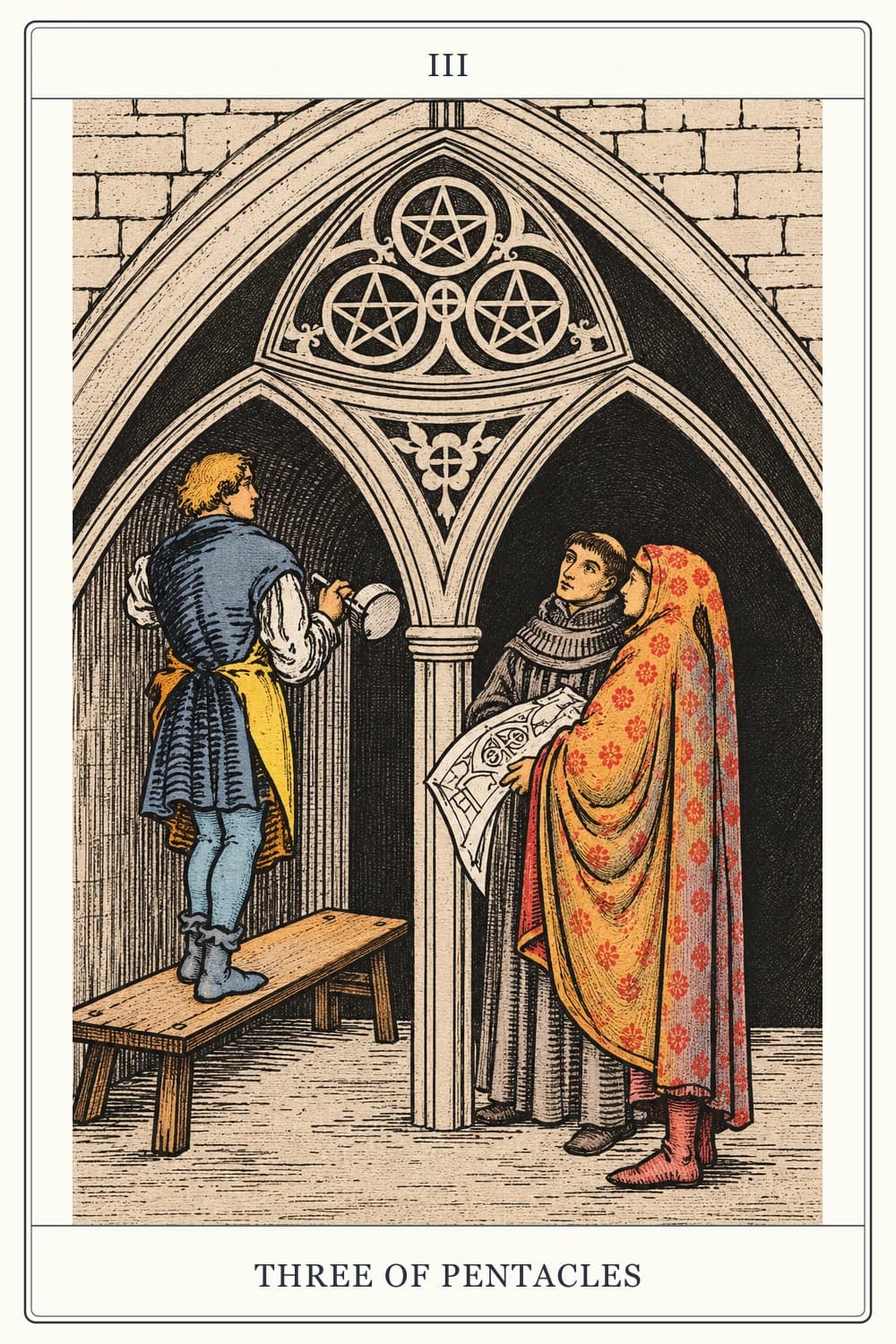
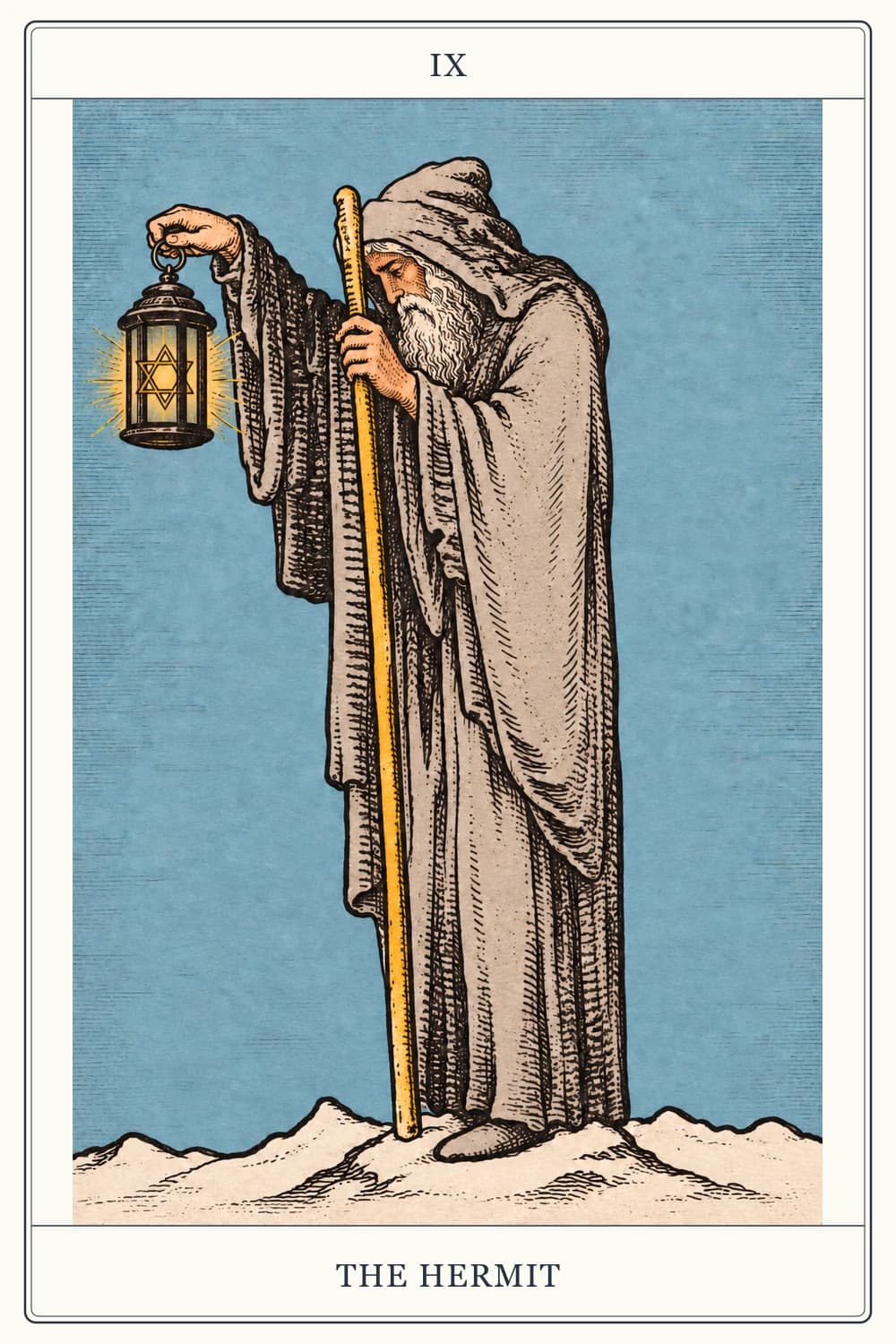

These cards are chosen to illustrate the class-versus-home question, rather than drawn for you. Keep the same deadline, two free mornings and priority of individual feedback while reading them.
Option A — Three of Pentacles. One person stands on a bench with a tool while two others face them, one holding a drawing. Teamwork and planning are reference themes. Here: “The class could offer a shared setting for feedback; I need to check how that feedback works.” The group in the picture makes that theme understandable. It does not establish what this teacher provides.
Option B — The Hermit. A cloaked figure stands with a lantern and staff. Solitude and reflection are reference themes. Here: “Home practice gives me space to work at my own pace, while feedback would need a separate arrangement.” The lack of arranged feedback comes from the facts. A solitary figure does not mean that practising alone would be lonely or unsuccessful.
What matters most — Temperance. A winged figure pours liquid between two cups, with one foot in water and one on land. Balance and moderation are reference themes. In this role, ask: “Which arrangement gives me the feedback I want within the time I actually have?” This connects the wish for feedback to a manageable commitment. It does not automatically tell you to combine both options.
Together: “A shared setting may offer the feedback I want; independent practice offers control over pace. I need to check which commitment fits both my feedback priority and my free mornings.” A pleasant or solitary image is not a score. The remaining factual question is whether the class includes individual feedback without requiring weekday work.
Before Friday’s deadline, you ask the provider about both points. In this illustrative continuation, they confirm a ten-minute individual review during each Saturday session and no work required between sessions. Compare the same criteria for both options using that reply and the original facts.
| Criterion | Option A · class | Option B · home practice |
|---|---|---|
| Time | Two fixed Saturday sessions; travel fits. No required weekday work, according to the provider. | Two sessions you can arrange within the free mornings. |
| Individual feedback | Ten-minute individual review in each session, confirmed by the provider. | None arranged for this period. |
| Control over pace | The teacher sets the session structure. | You choose the exercise and how long to stay with it. |
Optional practice
Use a different provider reply before you choose: the class requires an hour of preparation on a weekday. You have no weekday practice time, the Friday deadline still applies, and no exception has been offered. Keep the same cards. How does this change the available options? Does Temperance make a combined plan possible?
See one possible answer
The class as described no longer fits the time limit. Do not invent a spare hour, permission to skip the preparation or a place on another course. Home practice remains available, but it still lacks individual feedback. You could decline this class and choose home practice with that limitation recorded, or leave the feedback goal unresolved while reconsidering later possibilities. Temperance does not create an available combined plan or extend the held place beyond Friday.
Choose a trade-off and review what you actually experienced
Return to the original reply confirming individual reviews and no required weekday work. One reasonable choice is the class: you accept fixed session times in exchange for confirmed feedback, your stated priority. You could instead choose home practice if control over pace mattered more. That would change the priority behind the choice; neither card requires one universal winner.
An initial note could read: “A: class; B: home practice. Deadline: Friday 6 p.m. Limits: two Saturday mornings, budget, no weekday practice time. Priority before reading: individual feedback, then flexibility. Selected upright example: Three of Pentacles / A; Hermit / B; Temperance / What matters most. Provider confirmed individual reviews and no homework. Choice: class; accept its fixed structure. Review after the first session: did I receive feedback I could use, and did attendance fit?”
An illustrative later note: “I attended the first session and received a comment about the uneven edge of my colour wash. I tried that correction on a second wash during the session. Attendance fit the morning I had set aside. The second session has not happened yet.” You can now assess that piece of feedback and the actual time commitment. This does not establish how the whole course will go or whether every future class will suit you.
Keep your comparison in a notebook or document using the worksheet. The main action at the end opens Decision setup. Name both actions in your question so the option roles have something specific to examine. To follow this upright method, clear Include reversed cards. Check the selected layout before drawing. Opening setup does not save this worksheet or preload the teaching cards.
Reading worksheet
Two-option decision worksheet
Decision and actual deadline:
Option A: an available action:
Option B: an available action:
Hard limits for either option:
My priorities before drawing, in order:
What is still unconfirmed:
One comparison question naming both options:
Cards and orientations in Option A / Option B / What matters most:
Possible themes and another interpretation:
The same criteria applied to both options:
Evidence checked and where it came from:
Any priority I changed, and why:
My choice or next check, and the trade-off I accept:
When I will review and what I will observe:
Later: what happened and what remains unknown:
Compare four rewrites that leave room for a choice
Use a rewrite to clarify the comparison, not to disguise a request for a guaranteed result. If the concern is about someone else’s decision, the useful task may be preparing your own response rather than assigning two possible outcomes to Option A and Option B.
| Starting question | A question to explore | What changes |
|---|---|---|
| Which path will definitely work? | What trade-off matters between the weekend class and home practice? | Names available actions without promising success. |
| How do I prove Option A is best? | What information could change how I see either option? | Permits evidence against the preferred option. |
| Will they choose me or someone else? | What can I prepare while I wait for a decision I do not control? | Changes to a response task; it is not a two-option decision of your own. |
| Should I say yes because the opportunity is rare? | What would accepting and declining each require from the time I have? | Separates the deadline and sense of urgency from the actual commitment. |
Choose one of twelve prompts for your comparison
Use Values to name priorities, Demands to examine commitments, Assumptions to identify missing evidence, and Ownership to record what you choose and accept. Select one prompt and apply it to both named options.
For the class example, “What support would each path need?” becomes “What individual feedback is actually included in the class, and what feedback is arranged at home?” That produces a factual check for each path. You can make the comparison directly; drawing cards is optional.
| Task | A question to adapt |
|---|---|
| Values | Which priority matters most in this particular choice? |
| Values | What would still matter to me after the excitement wears off? |
| Values | Which need am I unwilling to trade away in either option? |
| Demands | What would each option require from the time I actually have? |
| Demands | Which commitment in my preferred option have I not accounted for? |
| Demands | What support would each path need, and what is confirmed? |
| Assumptions | Which expectation about Option A needs checking? |
| Assumptions | Which concern about Option B is a fact, and which is a guess? |
| Assumptions | What missing information could change this comparison? |
| Ownership | Which trade-off am I willing to accept, and why? |
| Ownership | Is a small trial actually available before the deadline? |
| Ownership | What will I check after choosing to learn whether the option fits? |
Common questions
- Can the cards tell me which option is correct?
- They cannot establish a correct winner. The Decision layout helps you examine both paths and a criterion. Your choice uses the actual limits, evidence and priorities. If those conflict with a card interpretation, keep the known facts and revise the interpretation.
- What if there are more than two options?
- Make a practical shortlist using your limits, or first clarify what you need to find out. This layout compares two named actions; it does not make other possibilities disappear. Waiting or combining paths belongs in the comparison only if it is genuinely available.
Sources and further reading
External references for these reading methods. Orara created the examples on this page.