Tarot card meanings for love: read the connection in context
Use a card's theme to clarify your part in a relationship and what you still need to ask. Follow an uncertain dating plan from a symbolic meaning to a specific question and a reply you can review.
Start here
You want to relate a card's meaning to dating or a close relationship.
In the dating example, separate the two cancelled plans from the reason you do not know. Use Two of Cups in You to name the kind of exchange you want, then check what still needs a reply.
Follow Two of Cups from a symbol to a questionOrara editorial · Updated · Our approach
On this page
Start with the picture and what happened between you
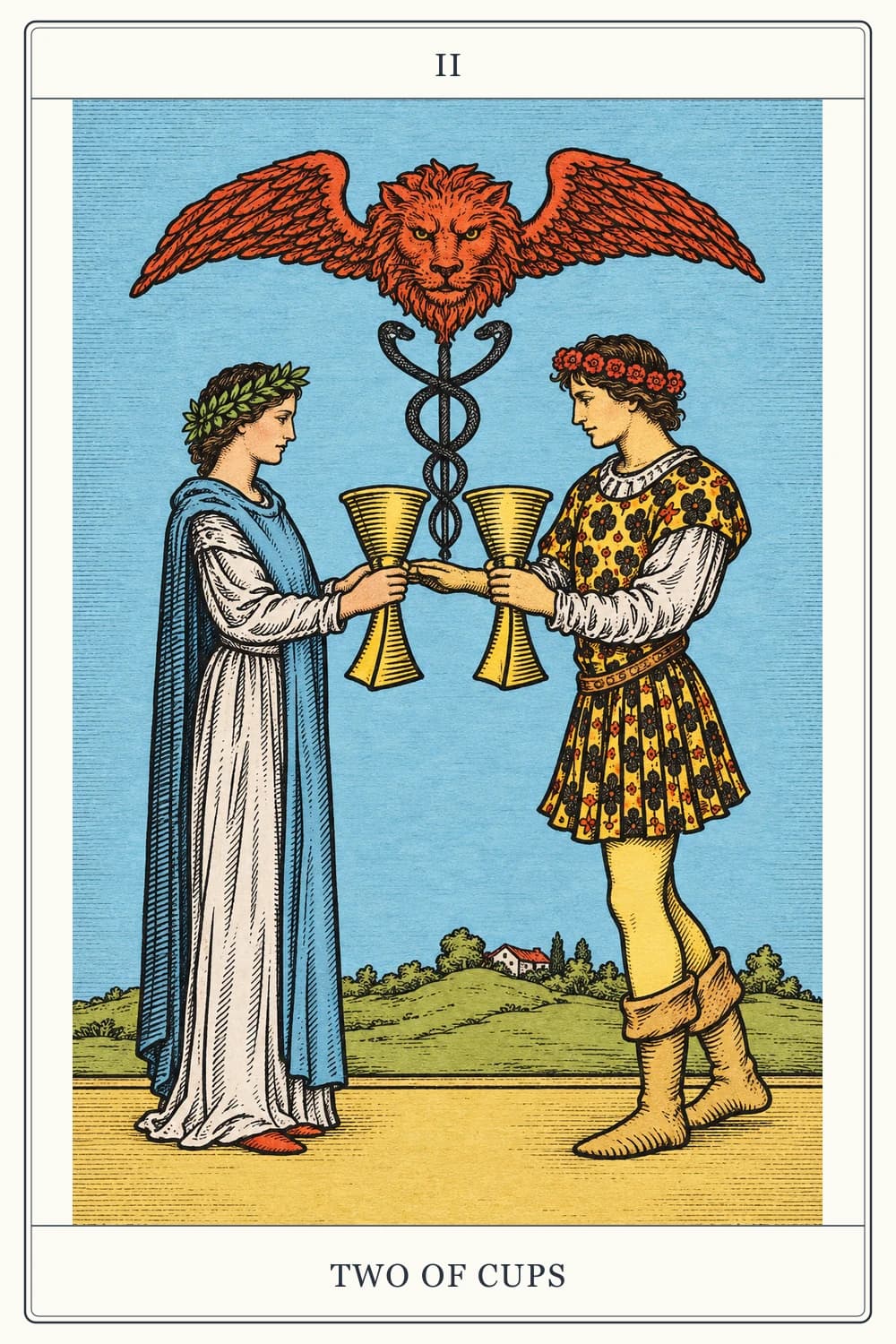
In this invented example, you are dating someone. You enjoyed your last date and want to meet again. They cancelled the next two arrangements in polite messages, without giving a reason or suggesting another time. Sunday afternoon is the only time you can offer next week. The cancellations and your availability are known; their feelings and reasons are not.
Ask: 'How can I approach making plans with this person?' The selected Two of Cups is upright, with the picture the normal way up. It shows two people facing each other, each holding a cup. Connection and exchange are traditional associations; Orara's reference also emphasizes how both people take part. The pictured exchange gives you a theme to examine, rather than evidence that the same exchange already exists in this relationship.
For a one-card study example, use You as the position, meaning the role assigned to the card. Here it asks what you need and how you want to take part. A possible sentence is: 'I want to see this person, and I want both of us to take part in making a plan.' That fits your interest and the absence of a replacement arrangement.
For your own card, open its linked name or your deck's guidebook. Use the upright section for a card the normal way up; a reversed card is upside down and has its own reference section. Check the picture and a relevant meaning before applying it to the interaction.
For a useful contrast, Ace of Cups can suggest making room for feelings; Two of Cups brings an exchange between people into view. In this situation, being ready to express your interest is different from having agreed a plan together. Neither card establishes what the other person feels.
Give the meaning a specific role
A spread is a layout with a role for each card. Orara's Your Relationship layout uses You for your participation, Another view for a perspective to ask about, and Between you for an observable interaction pattern. Another view does not turn a card into an account of someone else's private thoughts.
The table compares alternative placements of the same Two of Cups, keeping the original dating facts fixed. It is not a draw with three copies of the card. Notice how a theme of exchange becomes your own preference, a question for them or a description of the planning so far.
| Role | A reading for this situation | What remains open |
|---|---|---|
| You | I want both people to take part in making a plan. | Whether they want the same kind of connection. |
| Another view | What kind of plan, if any, would they like to make? | Their answer until they choose to give it. |
| Between you | Two arrangements were cancelled, and no replacement is agreed. | Why the plans changed and what will happen next. |
Ask about the plan, then review the actual reply
Continue with Two of Cups in You. The interpretation identifies a wish for shared participation. A response within your control is one concrete invitation: 'I enjoyed our last date and would like to see you again. Sunday afternoon is what I can offer next week. Does that work for you, or would you prefer to leave plans open for now?' This states your interest and actual availability while leaving them a choice.
Before sending, a note could read: 'Question: How can I approach making plans? Two of Cups, upright, in You; selected example. I want mutual participation. Two cancellations, no replacement, reasons unknown. Response: offer Sunday once. Review after the reply, or before Sunday if no reply arrives. Check whether a plan was actually agreed.' You can also decide not to make another invitation; the card does not oblige you to continue pursuing a plan.
An illustrative later note: 'They said Sunday would not work and did not suggest another time. I decided not to keep the afternoon open. No new meeting is arranged.' You have learned that the offered time did not produce a plan. You have not learned why they cancelled or how they feel about the relationship.
Consider a plausible alternative before calling the planning one-sided. If they had already offered another date, that offer would be part of the exchange even if it did not suit you. Include it in the record and check the practical fit. Two cancellations alone would then leave out an important contribution from them.
Optional: connect all three relationship roles
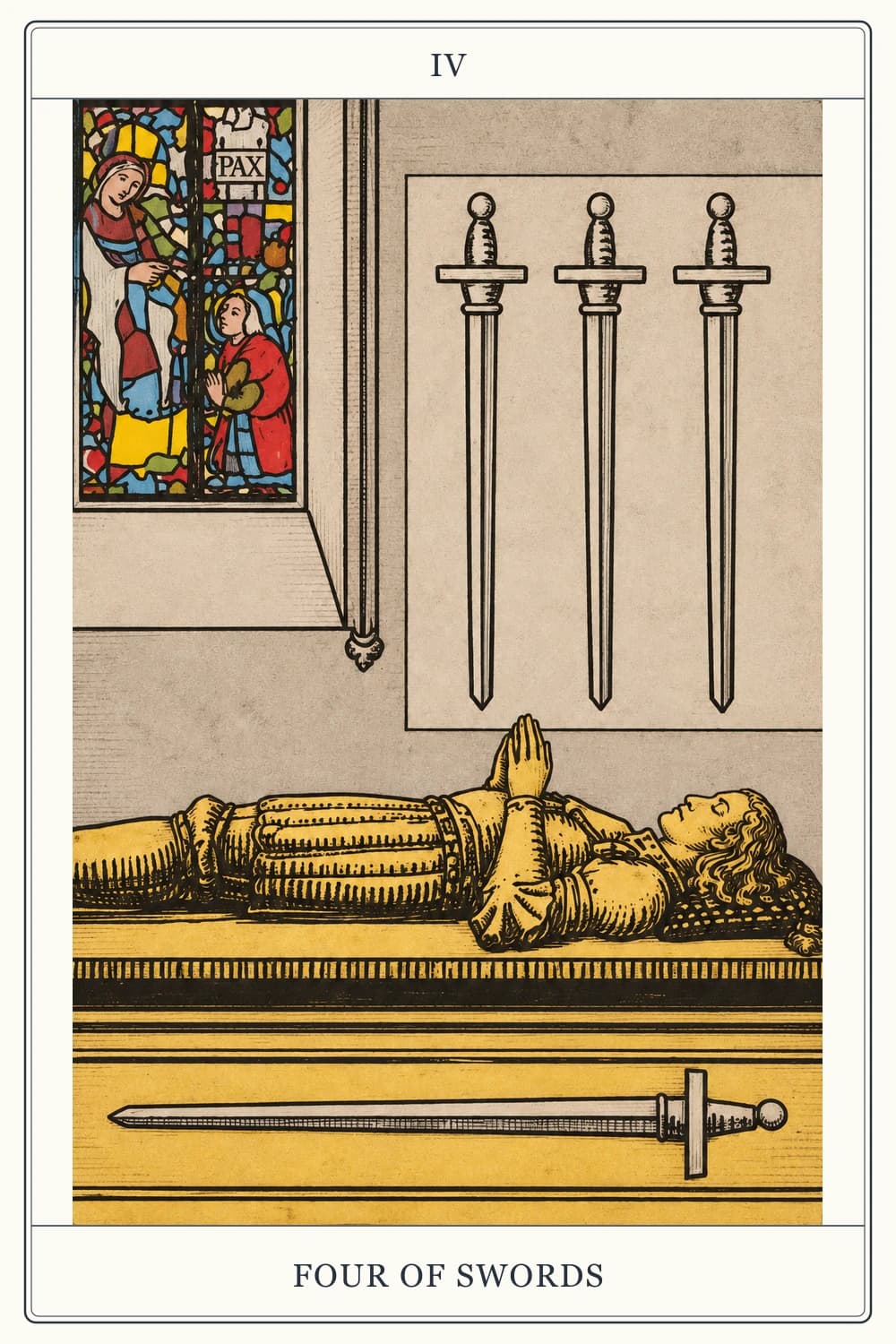
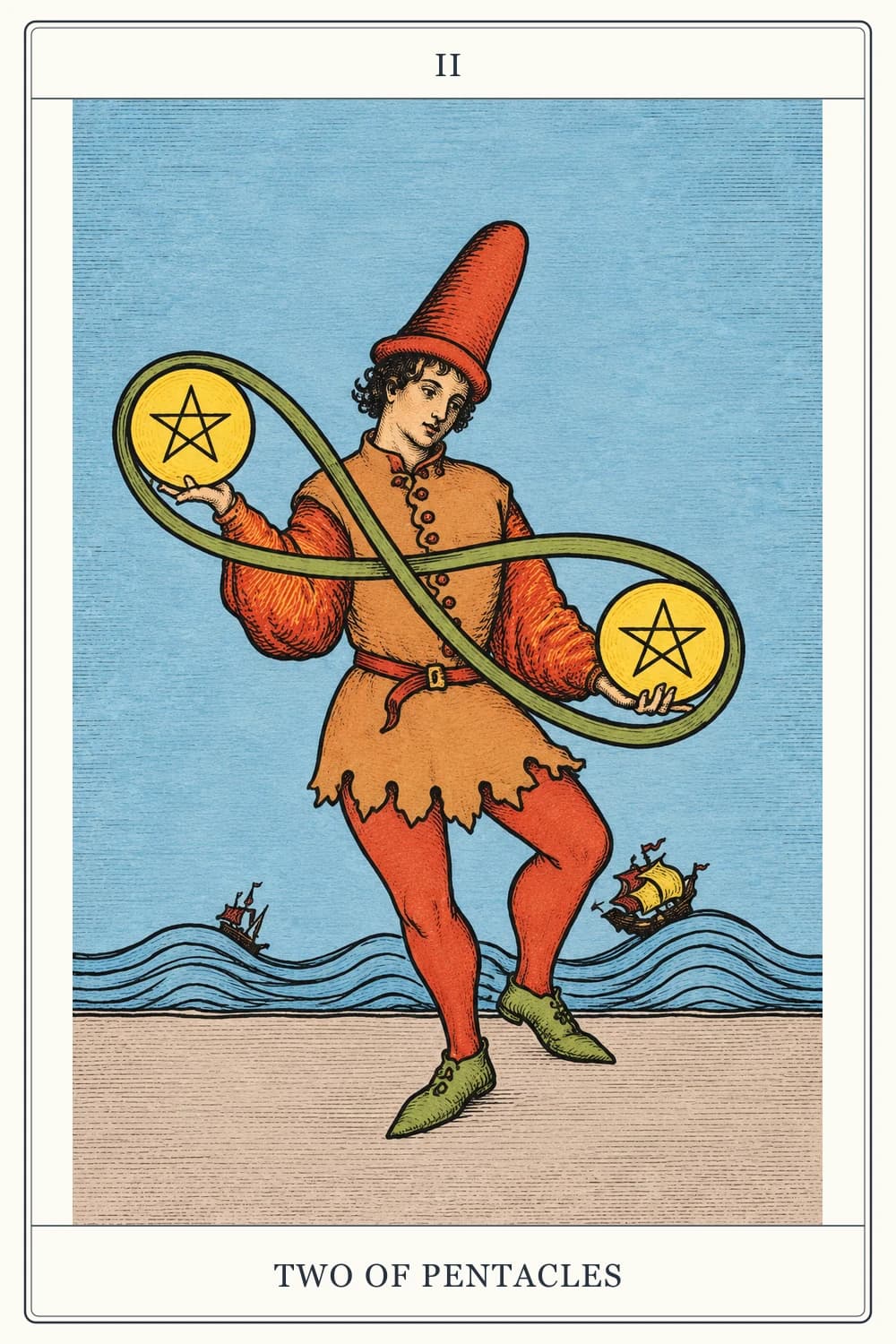
Return to the original facts before the invitation or reply. These three upright cards are chosen to show the complete Your Relationship layout. They are not a live reading about the person you are dating. Keep the same question: 'How can I approach making plans with this person?'
You — Two of Cups. The two figures with cups bring shared participation into view. In this role: 'I want contact that both of us help arrange.'
Another view — Four of Swords. A figure reclines beneath three swords, with another sword below. Rest and contemplation are reference themes. In this role, turn the pause into a question: 'Would they prefer to leave plans open for now?' That is a possibility to ask about. The card does not establish that they need rest, want distance or cancelled for either reason.
Between you — Two of Pentacles. A figure holds two star-marked discs inside a looping ribbon, with ships on waves behind. The discs are called pentacles. Flexibility and adjusting to changing demands are reference themes. Here: 'Our arrangements have changed twice, and we have not agreed a replacement.' The scheduling difficulty is observable; a cause such as work pressure is still unknown.
A connected reading could say: 'I want shared effort in making a plan; a pause is one possibility I can ask about, while our arrangements remain unsettled.' You gives the need, Another view keeps a perspective open, and Between you describes the interaction you can observe. The response is still a specific Sunday invitation, with the reply left open.
For your own attempt, the link at the end opens Your Relationship setup. Check the three roles and draw fresh cards. Look up unfamiliar meanings by their linked names, then explain each role before connecting them. The worksheet keeps the initial facts and interpretation separate from anything you learn afterward.
Reading worksheet
Relationship meaning check
Date and question:
Interaction I actually observed:
Card, orientation and assigned role:
Visible detail and reference theme:
My interpretation for that role:
Another plausible explanation or missing fact:
Question or boundary within my control:
Response and when I will review it:
Later: what was actually said or agreed:
What remains unknown:
Optional practice
Change one fact before the invitation: the person explicitly asks you not to contact them for now. Keep the same three cards and your wish for shared participation. What must change in the response, and what remains unknown?
See one possible answer
Do not send the Sunday invitation. You can still acknowledge that you want mutual participation and decide not to hold the afternoon open. In Another view, a pause is now something they have requested, rather than a possibility inferred from Four of Swords. The unsettled plans remain a known part of Between you. Record the stated request without claiming to know whether or when they will want contact again. A connection card does not override their request.
Common questions
- Do Cups always mean romantic love?
- No. Cups themes can concern feelings and connection in different relationships. Two of Cups can help you examine an exchange between partners or friends. Its role, your question and known interactions matter more than a fixed 'love card' label.
Sources and further reading
External references for these reading methods. Orara created the examples on this page.