Tarot questions for relationships: 12 prompts to adapt
What would you like to understand about a relationship? Choose from twelve questions about communication, needs, boundaries and patterns, then see how to make one specific enough for a reading.
Orara editorial · Updated · Our approach
On this page
Start with what happened
“Do they care about me?” can hold several different concerns: wanting more time together, feeling unheard or wondering whether to keep offering support. A useful tarot question brings one of those concerns into focus. Ask what you need to understand or choose; another person’s private feelings still need their own words and actions.
Suppose a friend agreed to return your book on Monday. It is now Thursday, they have asked to borrow another, and you need the first for a weekend reading group. You feel annoyed and wonder, “Are they taking advantage of me?” The missed date is something you can describe. Their reason is still unknown.
Try: “How can I respond to this request while making clear what I need?” This keeps the concern about lending without deciding your friend’s intention. “How can I make them respect me?” sounds open, but still asks for control over their reaction.
Before choosing a prompt, write one thing that happened and one thing that matters to you. In this example: “The return date passed; I want the first book back before lending another.” For more situations, compare these question rewrites.
Choose a question
Use Communication to prepare an exchange, Needs to name what matters to you, Boundaries to decide what you will offer, and Patterns to compare several interactions. These prompts work for friends, family and romantic partners.
Choose one, then add the situation. “What am I willing to offer?” becomes “What am I willing to offer while the first book is still out?” You can reflect on the question directly or bring it to a reading. For Patterns, use actual examples; one missed return does not establish a habit.
| Task | A question to adapt |
|---|---|
| Communication | What do I want to say about what happened? |
| Communication | What could I ask instead of guessing their reason? |
| Communication | How can I hear their reply while keeping my need clear? |
| Needs | What matters to me about this request or agreement? |
| Needs | What kind of time together would I like to ask for? |
| Needs | What support would I like beyond this one relationship? |
| Boundaries | What am I willing to offer, and what do I want to decline? |
| Boundaries | Which limit do I want to name before agreeing? |
| Boundaries | What will I do if this request is declined or my limit is ignored? |
| Patterns | Across these interactions, how have I responded when plans changed? |
| Patterns | What could I change in my response, even if theirs stays the same? |
| Patterns | What would a change in this pattern look like in practice? |
Keep the concern, change the wording
A rewrite should preserve what you care about. It changes the kind of answer you are looking for: from a verdict about the relationship to something you can explore or discuss.
| Starting worry | A question to try | Why it helps |
|---|---|---|
| Are they taking advantage of me? | How can I respond to this request while making clear what I need? | Lets you consider a request or limit without assuming their motive. |
| Will they contact me again? | What do I want to keep open, or stop waiting for, while contact is uncertain? | Explores your choice while leaving theirs unknown. |
| How do I make them accept my boundary? | How can I state my limit, and what will I do if it is ignored? | Separates what you will do from how they may react. |
| Are we meant to stay together? | Which expectations do I want to discuss before making a further commitment? | Names something to understand before deciding. |
Give the cards different roles
A spread is a layout in which each card has a role. Your Relationship uses You for your own participation, Another view for a possible perspective to ask about, and Between you for the exchange you can observe. This suits the book question: you have a need, your friend has yet to reply, and an agreement needs attention.
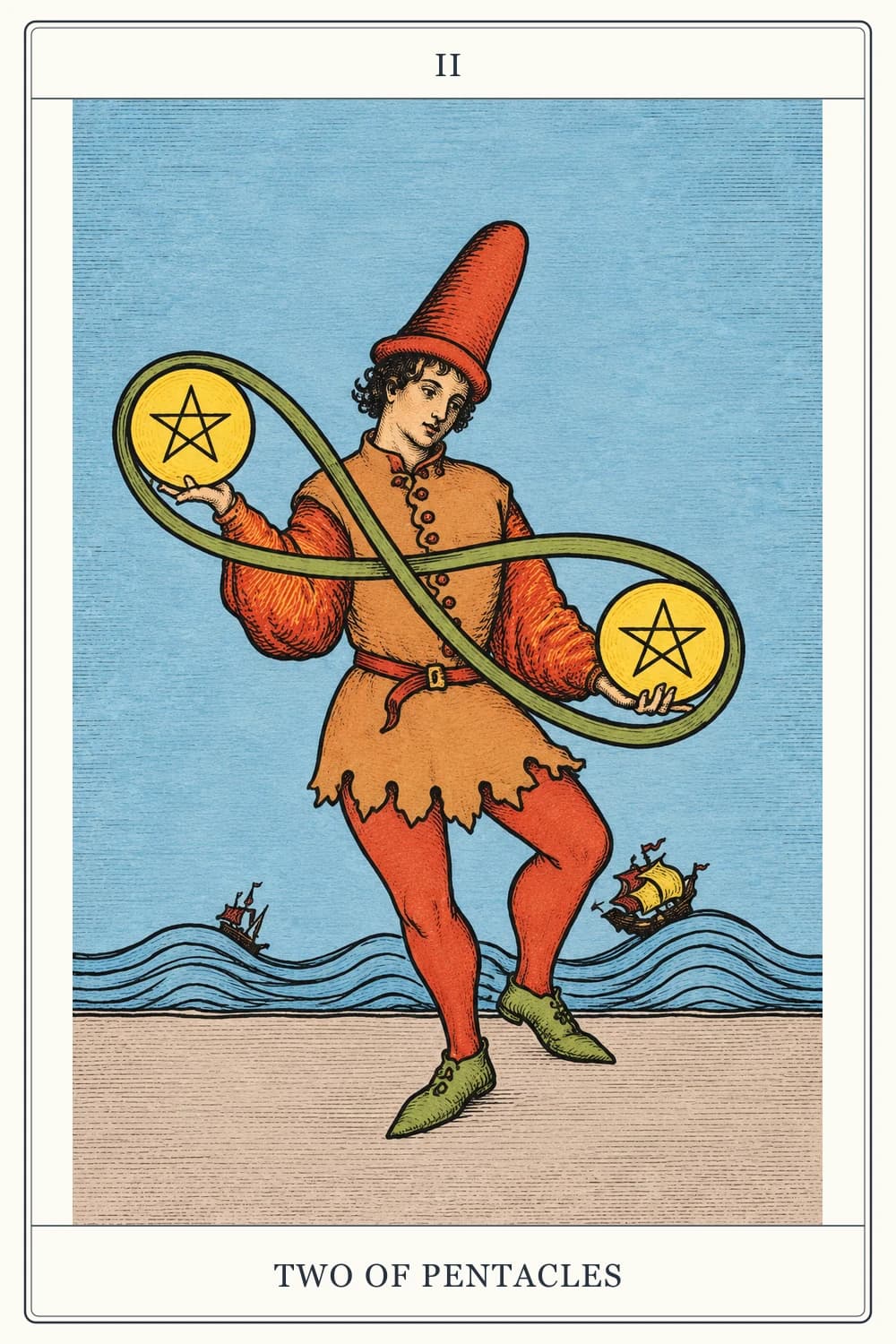
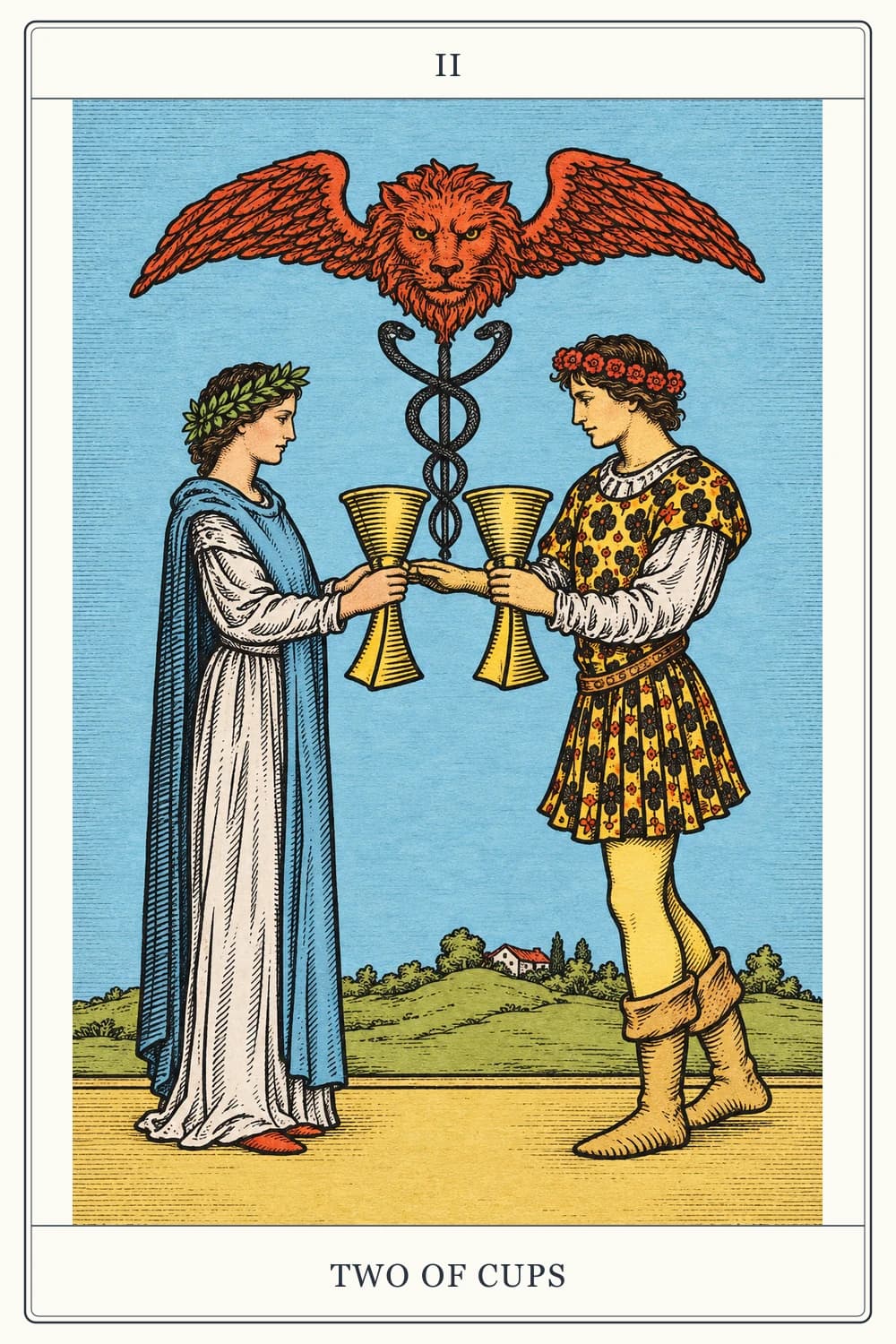
Let’s suppose you draw Queen of Swords, Two of Pentacles and Two of Cups, all upright (the normal way up). This is a hypothetical reading. The linked card names below open their meanings; use the upright entry to check an unfamiliar theme.
Read the three cards
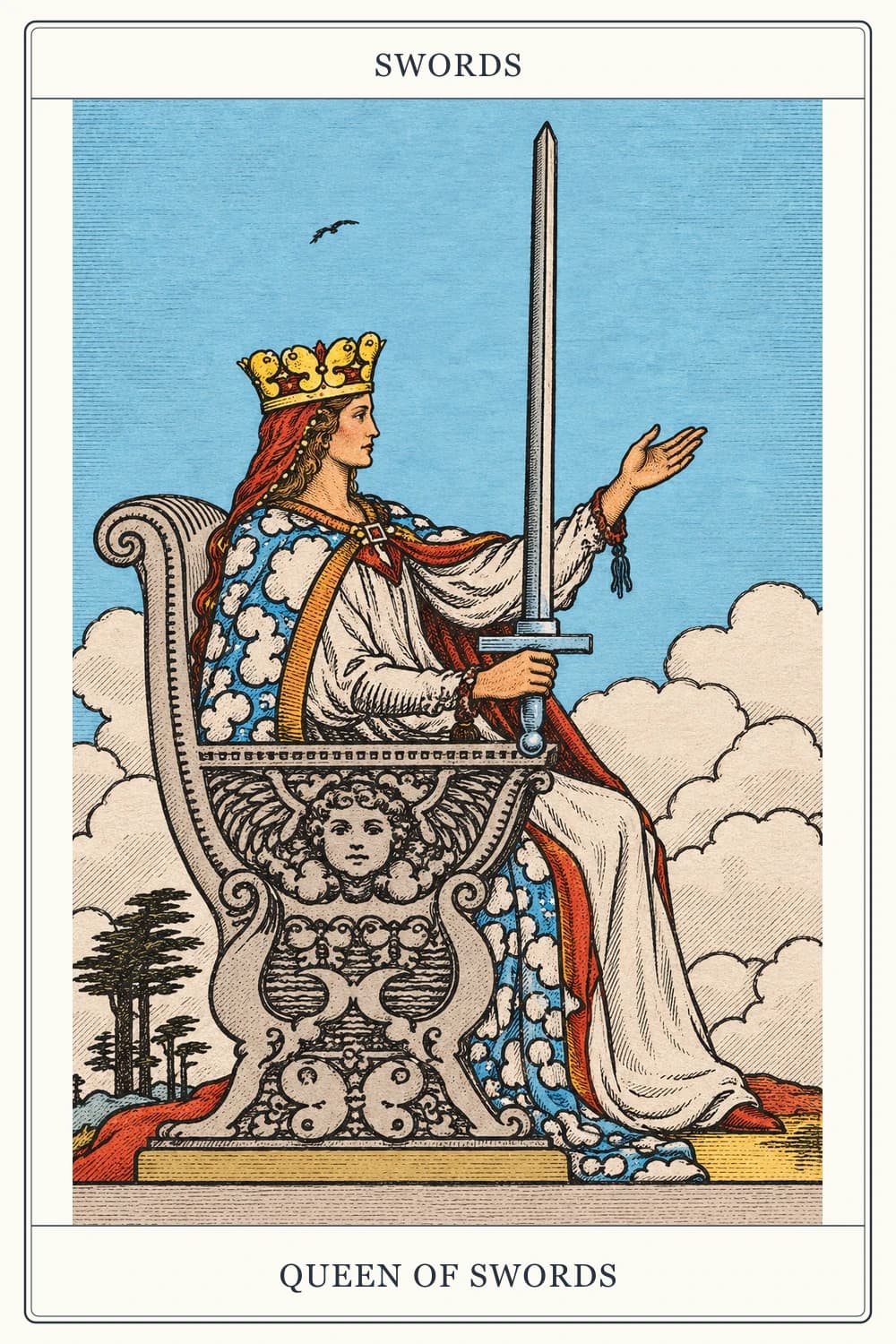
You — Queen of Swords. The seated figure holds a sword upright and extends a hand. The card is traditionally associated with honest, direct communication. In You, that suggests saying what you need plainly: ask for the book back and decide whether to lend another.
Another view — Two of Pentacles. A figure juggles two star-marked discs, called pentacles, inside a looping ribbon. Its themes of flexibility and juggling demands suggest asking, “What return arrangement would work for you?” That leaves room to hear about a difficulty; it does not establish that your friend is busy or excuse the missed date.
Between you — Two of Cups. Two people face each other holding cups. Its theme of connection draws attention to the exchange: what has each person agreed to? Here, a return date has passed and a new loan is being requested. The useful question is whether you can reach an arrangement both understand.
Together: “I want to be direct about getting the book back, while leaving room to agree how. I can discuss the return without agreeing to another loan.” The Queen shapes your approach, Two of Pentacles opens a question, and Two of Cups brings it back to an agreement.
A one-off oversight is also possible. The facts do not yet distinguish it from a wider problem, so an accusation would go beyond the example. If you had already agreed to a later return, you would need to include that before treating the original date as missed.
Make a request, then hear the reply
For the original situation, you might say: “I need the book for this weekend’s reading group. Could you bring it back before then? I’m holding off lending another until it’s returned.” The first part is a request: something you ask your friend to do. The second is a boundary: a limit on what you will offer.
An initial note could read: “Queen of Swords / You: be direct. Two of Pentacles / Another view: ask what return arrangement works. Two of Cups / Between you: agree the return separately from a new loan. I’ll ask for the book before the weekend and look back after the reply.”
Suppose the reply is, “I can only return it on Monday.” A later note might say: “They offered Monday; I haven’t agreed yet. I declined the second loan, but still need the first book for the weekend.” You communicated a limit, while the practical need remains unresolved. Keep the actual reply beside your first interpretation; a proposed date is different from a returned book. The journal review prompts can help you keep those notes distinct.
Common questions
- Can I ask what someone secretly feels?
- You can explore why that uncertainty matters to you, but a card cannot establish their private feelings. A more useful question might be, “What would I like to ask, and what do I need if the answer stays unclear?”
- Do I have to contact them after a reading?
- No. You may decide to wait, decline a request or make no contact. Respect a request for no contact. Where contact involves coercion or danger, prioritise safety and support rather than treating a reading as a reason to reconnect.
What would you like to explore in your own relationship? Bring one question to You, Another view and Between you. To follow the upright approach here, clear Include reversed cards in setup, then draw your own cards.
Practice: change the situation
Practise adapting a question when the facts change. Before you answer the second request, your friend returns the first book. Keep the same three cards. Write a new question and one possible response. What changes in Between you?
See one possible answer
Try: “What am I willing to offer in response to this new request?” You might say, “Thanks for bringing it back. I’m keeping my books at home for now.” Between you now includes a completed return, so the overdue-book request no longer fits. Returning it meets your earlier condition; it does not oblige you to lend again. Directness and room for a reply still apply.
Reading worksheet
A relationship reading note
Situation and what happened:
My feeling and need:
My question:
Cards, orientations and roles:
Connected reading and another possible explanation:
A request or limit I want to express:
When I will look back:
Later reply, action and what remains unresolved:
SourcesJoan Bunning · Learning the Tarot
References for question wording and traditional card associations. The example and notes are by Orara.
External references · learntarot.com