Weekly tarot reflection: choose a focus you can revisit
A weekly reading gives you a theme to return to as the week unfolds. Use Energy, Challenge and Focus to connect what you want with a manageable practice, then notice what the experience teaches you.
Start here
You want a focus to return to during the coming week.
Name the week and one activity you want to approach differently. Follow the cooking example: what makes repetition useful here, and what can the review say if only one attempt happens?
Follow a weekly intention through practice and reviewOrara editorial · Updated · Our approach
Week Ahead at a glance
- Energy
- Challenge
- Focus
Use when: You want a simple intention for the coming week.
Choose another approach if: You need a date, a prediction, or a decision between two named options.
Example questions
- What deserves my attention this week?
- How can I make space for what matters this week?
- What approach could help me through a demanding week?
On this page
Give each card a different weekly job
A spread assigns each card a role, called a position. Orara’s Week Ahead spread uses three roles to turn a broad wish into something you can revisit. Read Energy as an approach you could bring to the week; the cards do not forecast its events.
| Position | Question it helps you explore |
|---|---|
| 1 · Energy | What attitude would support the kind of week I want? |
| 2 · Challenge | What known friction deserves attention? |
| 3 · Focus | Where could I direct my effort or curiosity? |
Define the week and leave room to adapt
Name the period before selecting cards: Monday through Sunday, for example. Note the commitments you know about and choose one area to explore. “How can I enjoy cooking again this week?” is easier to work with than “What will happen in every part of my life?”
Plan a review at the end of that period. A weekly focus can survive a changed plan: you may try less than you hoped, learn that the activity felt wrong, or discover a different priority. Keep those observations alongside the original intention.
Prepare three cards and a place to return to
Write your question and week in a notebook or document. For a physical reading, shuffle and take three cards without looking, placing them left to right as Energy, Challenge and Focus. Use upright cards, with the pictures the normal way up, for this first attempt.
In Orara, open Week Ahead setup below, clear Include reversed cards, then select Draw 3 cards. For each card, notice a picture detail and consult its upright entry through the linked name, card library or your deck’s guidebook. Explain how one theme fits its weekly role. The selected teaching example below can be read without drawing cards.
Example: rediscover enjoyment through practice
For the coming Monday–Sunday, you want cooking to feel interesting again. Last week you tried several unfamiliar recipes and spent more time checking instructions than enjoying the process. You expect to cook at home on Tuesday and Friday, though Friday’s plans may change. You already have a familiar soup recipe and its ingredients.
Ask “How can I enjoy cooking again this week?” The upright Star, Two of Pentacles and Eight of Pentacles are selected for the example. The question allows both pleasure and learning to matter.
| Position | Annotated card |
|---|---|
| 1 · Energy | The Star in Energy |
| 2 · Challenge | Two of Pentacles in Challenge |
| 3 · Focus | Eight of Pentacles in Focus |
1 · Energy — The Star
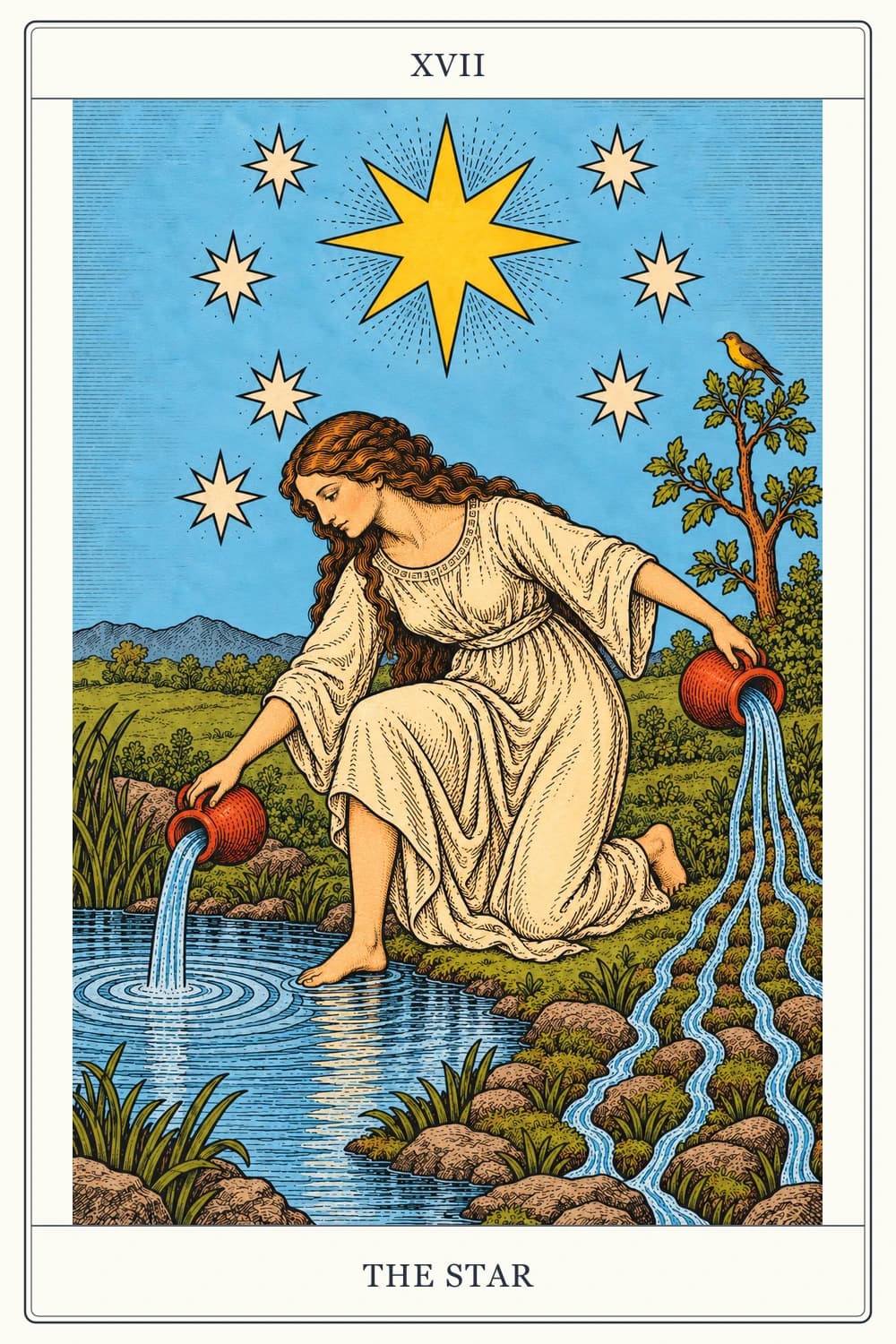
Illustrative card · Energy
The Star — read the card meaningA figure pours water onto land and into a pool beneath a large star. Joan Bunning associates this card with hope, inspiration and serenity. In Energy, those themes suggest an inviting attitude: “Let me find something to enjoy here again.”
That fits your wish to return to cooking without turning every meal into a performance. It does not promise a calm week. The role gives you an approach to bring to whichever cooking opportunity actually happens.
2 · Challenge — Two of Pentacles
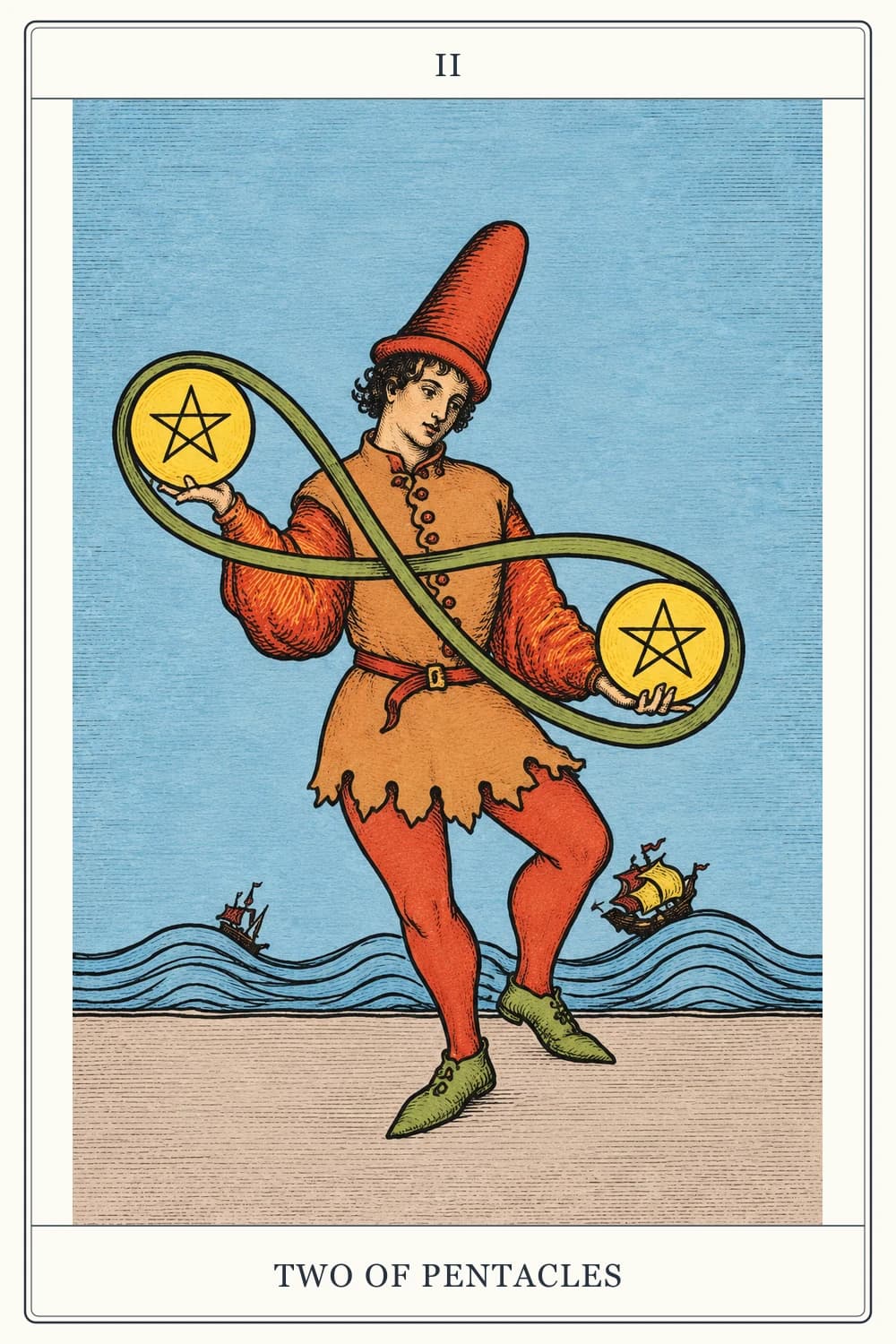
Illustrative card · Challenge
Two of Pentacles — read the card meaningA figure holds two coins joined by a looping band while ships ride waves behind them. Bunning’s themes include juggling and flexibility. In Challenge, consider the effort of managing novelty alongside ordinary meal preparation.
Your recent experience supports “Too many new things at once can crowd out enjoyment.” Friday’s uncertain plan adds a reason to keep the intention adaptable. Trying a different recipe every evening would introduce more decisions; repeating something familiar gives you less to manage.
3 · Focus — Eight of Pentacles
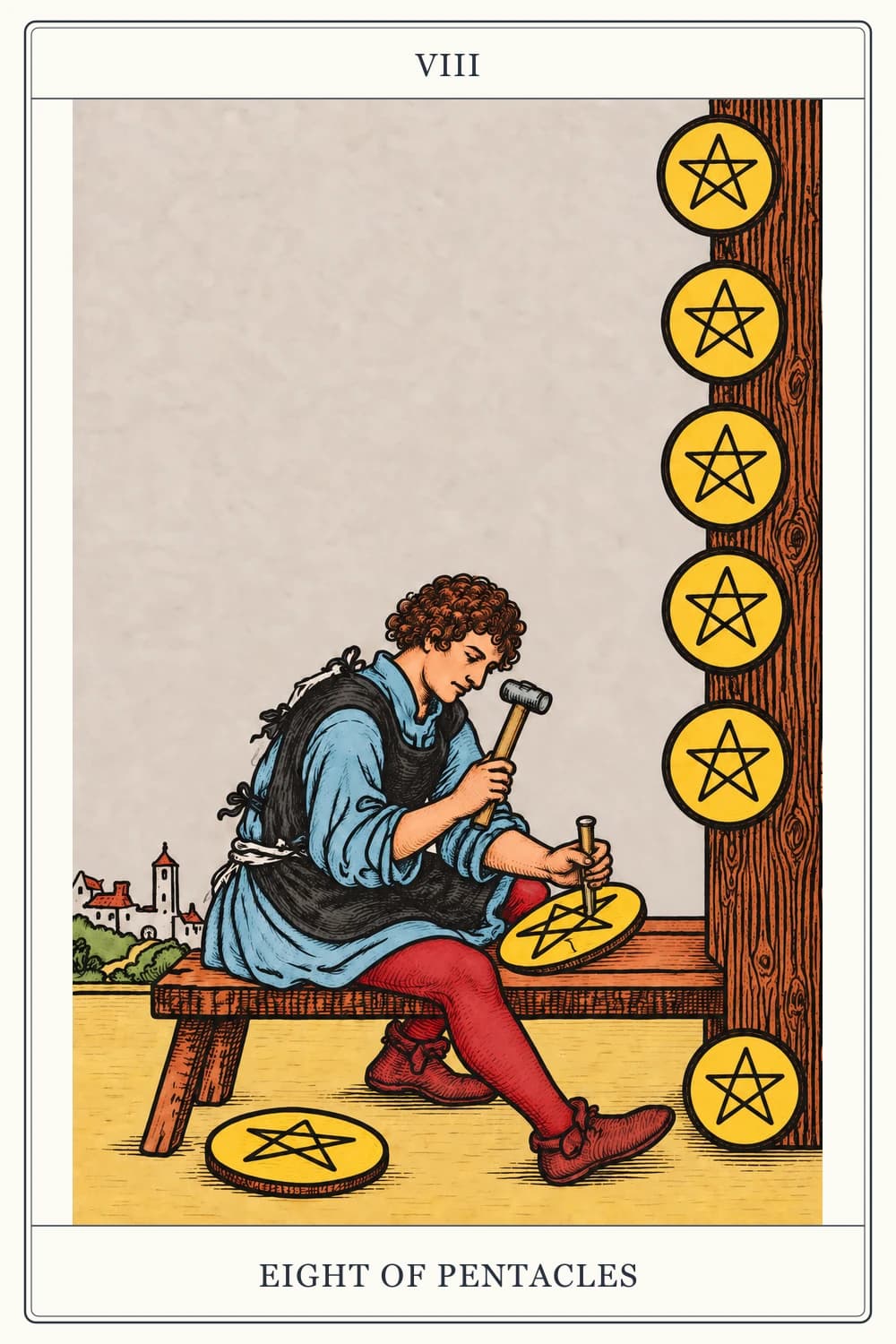
Illustrative card · Focus
Eight of Pentacles — read the card meaningA seated worker uses tools on a coin, with several finished coins nearby. Bunning connects the card with diligence, learning and attention to detail. In Focus, that can mean returning to one skill and noticing what changes with practice.
Make the familiar soup and pay attention to one aspect, such as the texture you prefer. If Friday remains available, make it again and compare. You are choosing attentive repetition because unfamiliar recipes overwhelmed the pleasure last week. If variety were what you missed, exploring a new dish could fit better.
Carry one intention through the week
Together: “Bring curiosity back, reduce the number of moving parts and learn from a familiar dish.” The Star supplies the reason to try; Two of Pentacles shapes the size of the attempt; Eight of Pentacles gives the practice a focus.
Monday’s note: “This week — Star / Energy: curiosity; Two of Pentacles / Challenge: too much novelty; Eight of Pentacles / Focus: repeat one dish attentively. Make the soup Tuesday, repeat Friday if home. Review Sunday: what did I notice, and was cooking more enjoyable?”
Illustrative Sunday note: “I made it twice. On Friday I checked the recipe less and noticed the texture more. I enjoyed that part, though the cleanup still felt like a chore. Next week I want to keep the familiar base and try one variation.” The review identifies what helped and what remained ordinary work.
Optional practice
Friday’s plans changed, so you cooked only once. On Sunday you remember enjoying the preparation. What can your review say about the weekly focus, and what can it not yet say about repetition?
See one possible answer
Record one attempt and your enjoyment of it. The repeat did not happen, so you cannot compare attempts or attribute improvement to repetition. You may choose to revisit the dish in a later week if that still interests you. There is no missed session to repay just to make the reading look successful.
Keep enough of the week to learn from it
Save the intention in your own notebook or document, then add the review beneath it. Keep the difference between what you planned and what happened visible. One useful observation is enough; you do not need a daily transcript.
Opening Week Ahead setup begins a new reading. It does not preload these cards or save the worksheet below.
A quick journal note
Week / question:
Energy / Challenge / Focus — cards and interpretations:
My intention and when it fits:
End-of-week review: what happened, what I learned, what to revisit:
Detailed journal worksheet
Weekly intention and review
Week and question:
Known commitments and available opportunities:
Energy — card, detail, theme and intended approach:
Challenge — card, detail, theme and known friction:
Focus — card, detail, theme and practice to try:
How the three roles connect:
Response and any condition it depends on:
What would make a different focus more useful:
Review date:
Actual attempts and observations:
What remains untested or worth revisiting:
Sources and further reading
External references for these reading methods. Orara created the examples on this page.