Three-card tarot self-reflection: hear your own answer
Being pleased to be asked is not always the same as wanting to say yes. Inner Compass helps you explore that kind of uncertainty and put your own response into words.
Start here
You are hesitating over a reply and want to understand your response.
Write what happened and what you have noticed in yourself. In the newsletter example, separate being pleased to be asked from wanting the role, then follow how that distinction changes the reply.
Follow a hesitant reply toward a clearer preferenceOrara editorial · Updated · Our approach
Inner Compass at a glance
- What you know
- What needs attention
- Your next step
Use when: You want to understand how you could respond before taking action.
Choose another approach if: You want a diagnosis, a hidden truth about someone else, or the cards to decide for you.
Example questions
- What am I ready to look at more honestly?
- What do I already know about my own needs here?
- What would a small honest step look like for me?
On this page
Move from experience to a clearer response
A spread assigns a role, called a position, to each card. Orara’s Inner Compass spread uses three positions to examine your response to one situation. Begin with experience you can describe, then explore what deserves attention before choosing a next step.
| Position | Question to explore |
|---|---|
| 1 · What you know | What have I noticed, felt or already learned? |
| 2 · What needs attention | Which assumption, tension or missing fact should I examine? |
| 3 · Your next step | What could I express, ask or try with this understanding? |
Treat an interpretation as a question you can examine
“I have rewritten this reply three times” describes an observation. “I am avoiding saying what I want” offers an explanation. Several explanations may fit: perhaps you need information, dislike the wording or feel unsure about the request.
Use the card to explore a possibility and compare it with your experience. A familiar symbol does not establish a hidden motive in you or someone else. “I do not know yet” can be an honest result.
Prepare the question and three roles
Write a question about your own response, such as “What do I want to say about this request?” Add the facts and feelings you can already name. Keep a notebook or document for the reading and its later review.
With a physical deck, shuffle and take three cards without looking, placing them left to right in the roles above. Use them upright, with the pictures the normal way up. In Orara, open Inner Compass setup, clear Include reversed cards and select Draw 3 cards.
Read each card’s upright entry through its linked name, the card library or your deck’s guidebook. Connect a visible detail and one reference theme to its position. The following cards were selected for teaching, so you can follow the example without drawing your own.
Example: answer a request without borrowing an excuse
A friend asks whether you would edit a club’s monthly newsletter. You feel pleased to be included, but you remember disliking the repeated proofreading when you helped before. You draft “I am too busy this month”, then hesitate: you do have free evenings, and the request is for a continuing role.
Ask “What do I want to say about this request?” The selected upright cards are The High Priestess, Seven of Swords and Ace of Swords. The reading concerns your preference; your friend’s response is still unknown.
| Position | Annotated card |
|---|---|
| 1 · What you know | The High Priestess in What you know |
| 2 · What needs attention | Seven of Swords in What needs attention |
| 3 · Your next step | Ace of Swords in Your next step |
1 · What you know — The High Priestess
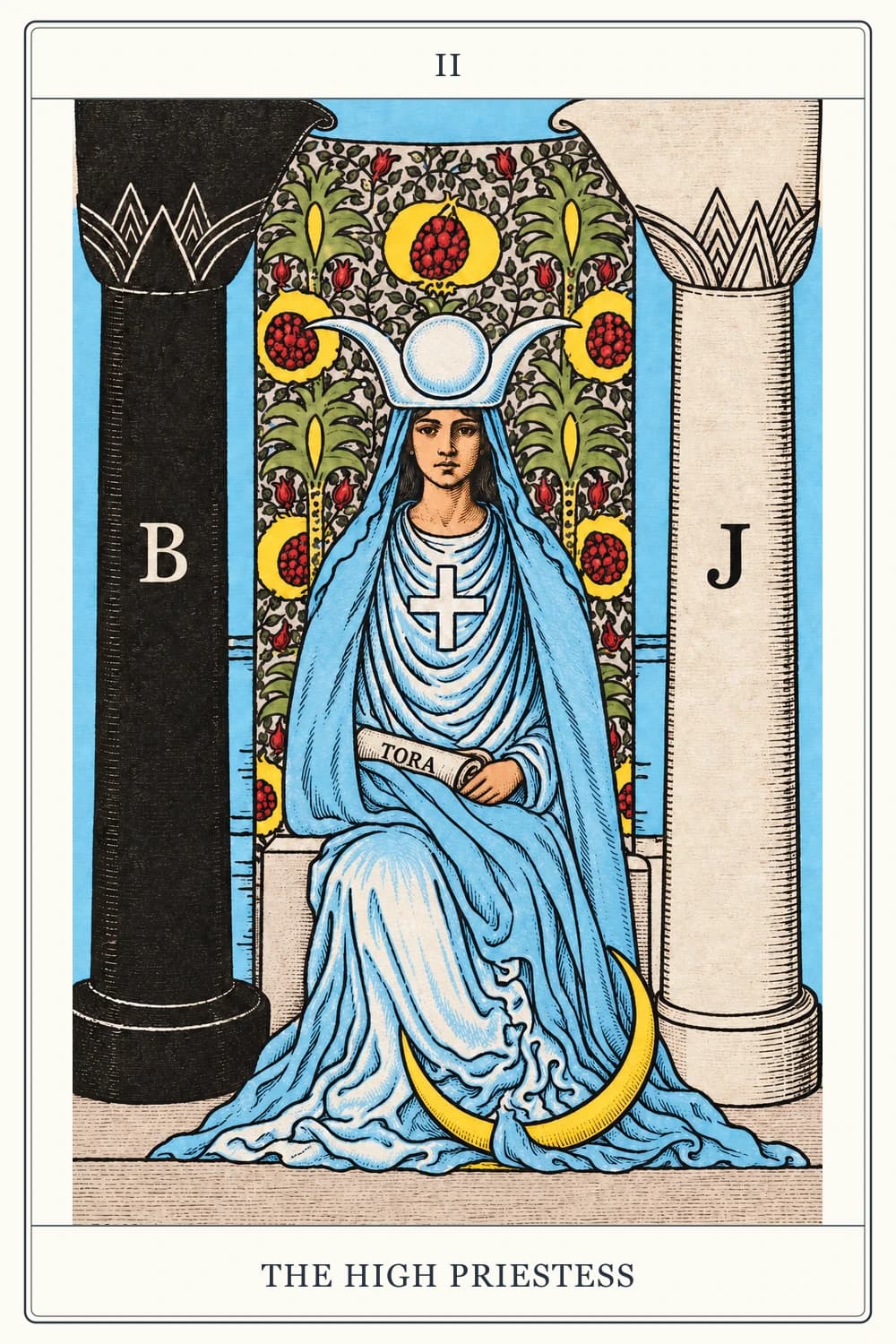
Illustrative card · What you know
The High Priestess — read the card meaningA seated figure holds a partly covered scroll between two pillars. Joan Bunning associates The High Priestess with receptivity, waiting and inward awareness. In What you know, let the image prompt a pause before reaching for a socially easy answer.
You can already name two experiences: pleasure at being invited and reluctance about the editing itself. Give both room in your note. “I like being included” does not have to become “I want this role”. The distinction comes from listening to your response, not treating the card as an authority over it.
2 · What needs attention — Seven of Swords

Illustrative card · What needs attention
Seven of Swords — read the card meaningA figure carries five swords away while looking back toward two left standing. Bunning discusses avoidance among this card’s themes. In this position, ask “Does my draft reply address what is actually making me hesitate?”
The temporary excuse about this month leaves your dislike of the ongoing work unspoken. You might be sidestepping a preference that feels harder to state. That is a possibility to examine, not a judgment about your character. If the real issue were an unknown deadline, asking for the deadline would fit better than assuming avoidance.
3 · Your next step — Ace of Swords
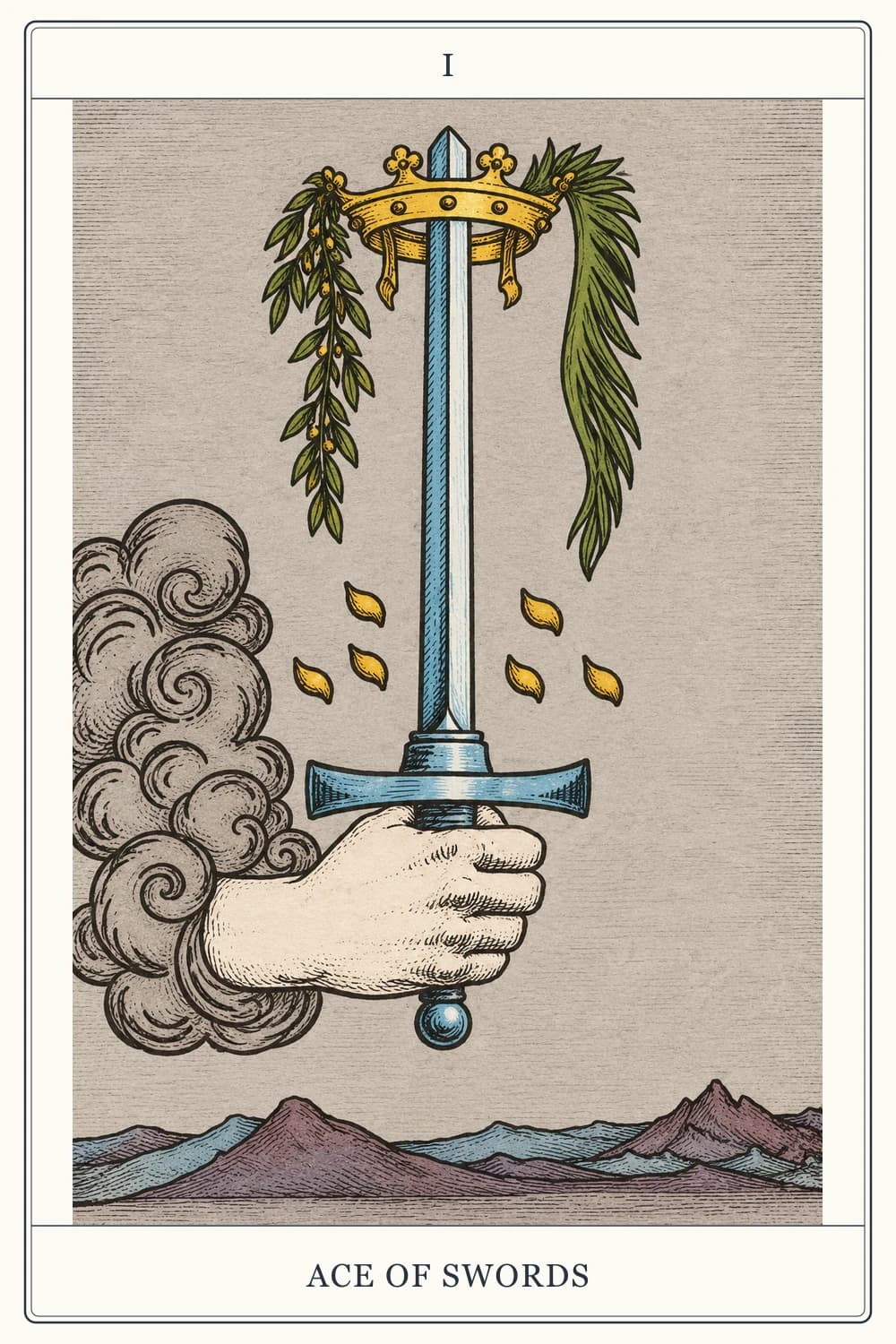
Illustrative card · Your next step
Ace of Swords — read the card meaningA hand holds a single upright sword through a crown. Bunning links this card with clear understanding and honesty. In Your next step, use that theme to find words that distinguish what you welcome from what you do not want to take on.
On reflection, you would enjoy interviewing a member once, but not editing every issue. A possible reply is “I am glad you thought of me. I do not want the ongoing editor role, but I would enjoy contributing one interview if that would be useful.” Offer that alternative only if you mean it; a clear decline can stand on its own.
Let clarity matter even when the answer is disappointing
The reading connects as “Notice my mixed response, examine the excuse I am reaching for and state what I actually want.” Send the reply you can stand behind, leaving your friend free to say whether the smaller contribution would help.
Initial note: “High Priestess / What you know: glad to be included, reluctant to edit. Seven of Swords / What needs attention: my busy-this-month excuse misses the ongoing issue. Ace of Swords / Your next step: decline editing and offer one interview. Review after the reply: did I express my preference clearly, and what happened?”
Illustrative later note: “They need a regular editor and cannot use an interview now. I declined. I feel relieved about the work and disappointed to miss the involvement.” The useful result is that the answer matches your preference. It does not require the alternative offer to be accepted.
Optional practice
Change the situation: you enjoyed editing previously and want to help again, but the friend has not said when drafts would arrive. You are hesitating because you cannot assess the turnaround. What should What needs attention and Your next step address?
See one possible answer
The missing schedule is now the relevant uncertainty. Ask when drafts arrive and how much turnaround is expected before accepting. The Seven of Swords is not proof that you secretly dislike the role; the Ace’s clarity theme can support gathering the information you need.
Keep your interpretation open to the response
Save the original note in your own notebook or document and add what happened later. Separate the words you used, the reply you received and your feelings about it. They can point in different directions without making the reflection a failure.
Opening Inner Compass setup starts a new reading; it does not save the worksheet or preload these teaching cards.
A quick journal note
Question / situation:
What you know / What needs attention / Your next step — cards and interpretations:
My chosen response:
Later: what I said or did, what happened and how I feel about it:
Detailed journal worksheet
Inner Compass reflection note
Date and question about my response:
Known facts and feelings I can name:
What you know — card, image detail, theme and relevant experience:
What needs attention — card, image detail, theme and a possibility to examine:
Your next step — card, image detail, theme and possible response:
How the positions connect:
Another explanation and what would support it:
The response I choose:
When to review:
Later: actual response, new information and my feelings:
What remains unresolved:
Sources and further reading
External references for these reading methods. Orara created the examples on this page.