One-card tarot reading: find a useful focus
A one-card reading gives a question your full attention. Follow The Hermit from a visible detail to a personal interpretation, then try a response you can reflect on afterward.
Start here
You want one useful perspective on a personal question.
Before looking up a card meaning, write one thing you already know about your question. In the book-group example, notice how that fact makes one Hermit interpretation more useful than another.
Follow The Hermit into an independent responseOrara editorial · Updated · Our approach
Single Card at a glance
- Focus
Use when: You want a short pause around one specific question.
Choose another approach if: You need to compare several options or examine a complex situation.
Example questions
- What deserves my attention right now?
- What perspective could help me approach this conversation?
- What can I bring to this task today?
On this page
Give the card one clear job
A spread is a card layout; a position is the role assigned to a card. Orara’s Single Card spread has one position, Focus: a perspective worth considering in relation to your question.
Ask about something you can explore, such as “What deserves my attention before our book-group discussion?” A question about your own approach leaves room for reflection. “Will everyone agree with me?” asks the card for information it cannot establish.
Look, choose a theme, connect it to your question
For your own attempt, write your question and one thing you already know. Choose one card. This lesson uses upright cards, with the picture the normal way up. With a physical deck, shuffle and take a card without looking, then place it upright.
In Orara, open Single Card setup below. Clear Include reversed cards, add your question if useful, and select Draw 1 card. A reversed card is upside down; leave that variation for another lesson.
Notice one detail in the picture. Read the upright entry through the card’s linked name, the card library or your deck’s guidebook. Pick a theme that relates to your question, then explain the connection in your own words. The example below uses a teaching card selected for this purpose; you can follow it without a deck.
Example: hear your own response before the discussion
You have finished a novel. In the group chat, friends praise its ending. You enjoyed the narrator’s voice but remember feeling rushed through the final chapter. You keep rereading their messages instead of deciding what you think.
Your question is “What deserves my attention before our book-group discussion?” The selected upright card is The Hermit. Your task is to understand your response well enough to bring it into the conversation.
| Position | Annotated card |
|---|---|
| 1 · Focus | The Hermit in Focus |
1 · Focus — The Hermit
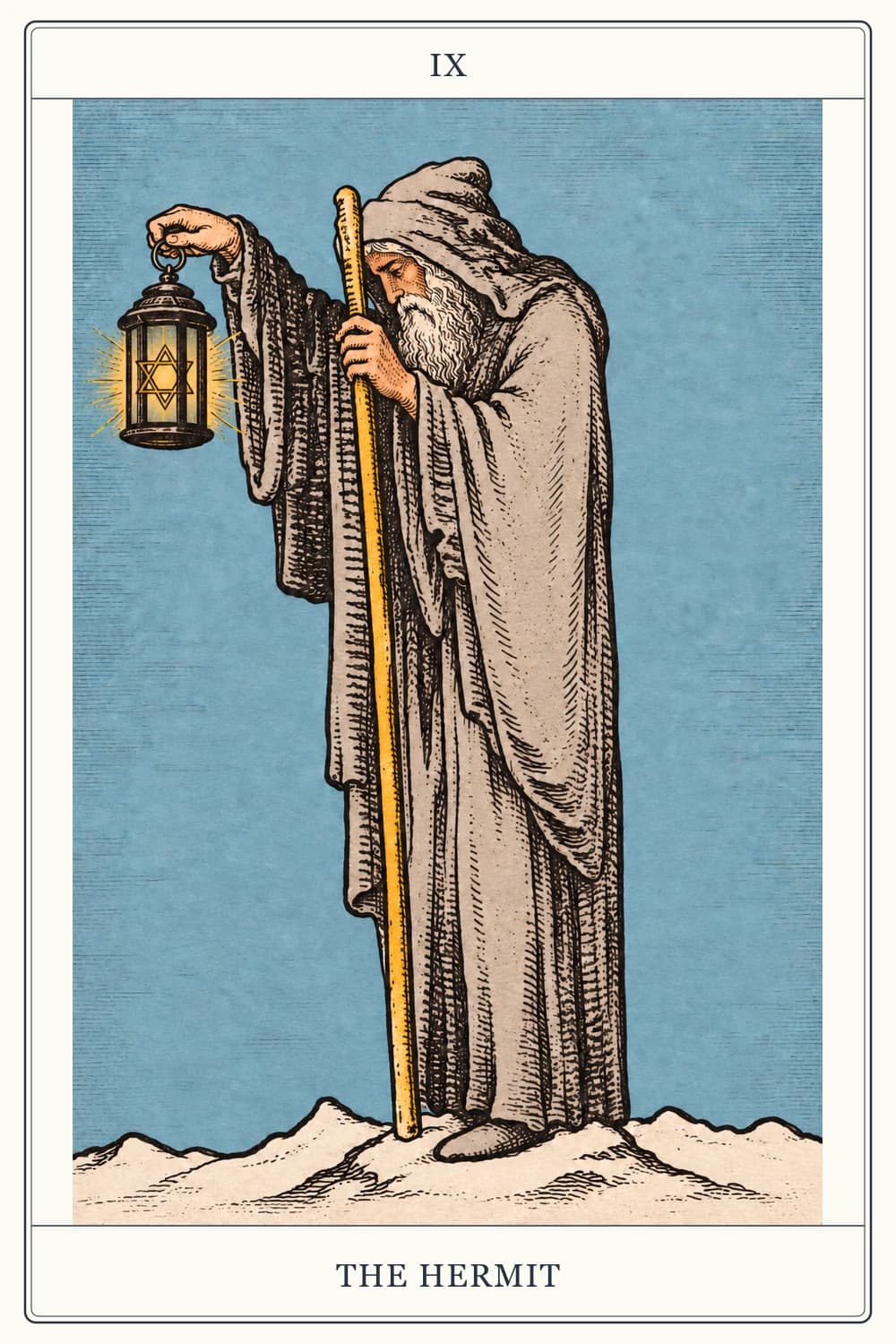
Illustrative card · Focus
The Hermit — read the card meaningA cloaked figure holds a lantern and a staff on snowy ground. Joan Bunning’s reference associates The Hermit with introspection, searching and guidance. The lantern offers an image for looking closely at something you have only partly understood.
In Focus, that could become “Give my own response some quiet attention before comparing it with everyone else’s.” This fits because you have an impression of the ending but keep returning to other readers’ opinions. Reread one passage that felt hurried and write what you notice about it.
Seeking guidance is another plausible reading of The Hermit. If you already understood your reaction and wanted to explore someone else’s interpretation, asking a thoughtful question would fit. Here, beginning with your own reading gives you something specific to discuss.
Make the interpretation usable
After rereading, finish the sentence “I enjoyed…, but I wanted more…” and point to a moment in the chapter. You can take that observation to the group without needing everyone to share it. The Focus card has helped you choose where to look; your reading supplies what you actually say.
Keep this to one card. A question, a personal interpretation and a response can all grow from the same Focus position.
Optional practice
You now know exactly why the ending felt rushed. What you want to understand is why your friends found it satisfying. With The Hermit still in Focus, would more solitary rereading be the most useful response?
See one possible answer
The searching or guidance theme can now support a question such as “Which moment made the ending work for you?” You have already clarified your view, so another person’s explanation supplies something new. Leave their reasons open until they answer.
Keep a short note, then add what changed
Initial note: “Before book group: The Hermit, upright, in Focus. Lantern → careful attention. I will reread the final exchange and name what felt rushed before checking the chat again.”
Illustrative later note: “I still wanted more space for the ending, but I could explain why. A friend noticed something I had missed. I left with a richer view without changing my whole opinion.” The useful result is a clearer conversation, not agreement or a verdict on the novel.
Keep your own note in a notebook or document. Opening setup starts a new reading; it does not save this worksheet or preload the example card.
A quick journal note
Question / card and orientation:
Known fact about my situation:
Focus — visible detail, theme and my interpretation:
Why this theme fits the known fact and question:
My response:
Later: what became clearer, changed or stayed unresolved:
Detailed journal worksheet
One-card reflection note
Date and question:
What I already know:
Focus — card and orientation:
Visible detail and reference theme:
My interpretation and why it fits:
Another reading I considered:
One response to try:
When I will review it:
Later observation and what remains open:
Choose a fresh draw or a daily check-in
Use Single Card for a fresh reading about a particular question. Today offers a shared upright card for the displayed date; refreshing that date keeps the same card. The daily-practice guide below explains that regular check-in.
If your question needs several distinct perspectives, choose a spread with those roles before a later reading. For this attempt, finish with one interpretation you can explain.
Common questions
- Is one keyword enough for a one-card reading?
- A keyword starts the reading. Add why that theme fits your question and what it helps you notice or try. That connection makes a general meaning useful to you.
- What if the card does not fit my question?
- Check the picture and reference once. If no useful connection emerges, record that and leave the question open. You can reflect or gather information without forcing the card to fit or drawing repeatedly for reassurance.
Sources and further reading
External references for these reading methods. Orara created the examples on this page.