Morning three-card tarot spread: a plan you can review
Use Situation, Obstacle and Advice to consider one activity today. This morning reflection ends with a response that fits your available time and a note you can compare with what actually happens.
Start here
You want to reflect before one activity today.
In the drawing example, check how the twenty minutes are divided. Notice that reading and getting ready use some of that time, then follow how the three cards lead to a smaller practice and an evening note.
Follow the sketch from morning plan to evening reviewOrara editorial · Updated · Our approach
On this page
Choose one activity and three roles
A spread is a layout of cards; a position gives each card a job. This morning practice uses Clarity, Orara’s Situation–Obstacle–Advice layout. Here the cards are prompts for reflection on your approach to one activity. They do not describe everything that will happen today.
Choose something you can name, such as starting a sketch or preparing one point for a conversation. Write the question and the facts you already know: available time, materials, commitments and what feels difficult. “What could help me begin today’s drawing practice within the time I have?” gives each position a specific task.
| Position | What to consider |
|---|---|
| 1 · Situation | How does this theme describe the activity and circumstances I already know? |
| 2 · Obstacle | What could complicate that activity, and what evidence supports this interpretation? |
| 3 · Advice | What response addresses that obstacle within the time and resources I have? |
Make room for both the reading and the response
Decide when you need to stop before selecting cards. Allow time for reading, looking up unfamiliar meanings and writing a note, as well as for any action you choose. Getting ready to leave still takes time. A first attempt may need a longer window than a familiar routine.
You can study the example below without drawing. For your own attempt, keep a notebook or document and a card reference available. The linked card names in the example open Orara’s meanings; find a different card through Tarot Cards in the main navigation, or use your deck’s guidebook.
This example uses upright cards: their pictures are the normal way up. A reversed card is upside down and can use another reference meaning. With a physical deck, choose the upright-only method before shuffling, take three cards without looking and place them upright from left to right in the listed roles.
In Orara, open Clarity below and enter your question. Clear Include reversed cards for this upright-only attempt, then select Draw 3 cards. Clarity is the existing three-card layout; there is no separate Morning layout to find. Keep your note in your notebook or document.
- Record the date, question, known facts, stopping time, and each card’s name, orientation and role.
- For Situation, then Obstacle, then Advice, describe a picture detail. Read the reference and choose a theme that answers that role in your known context.
- Connect the three roles: given this situation, this friction makes that response worth considering. If the connection does not fit, record what is uncertain.
- Choose an action only if it fits the remaining time. Name what you will check later, and stop at the time you set. Keep the same cards for that review.
Example: begin a sketch before leaving home
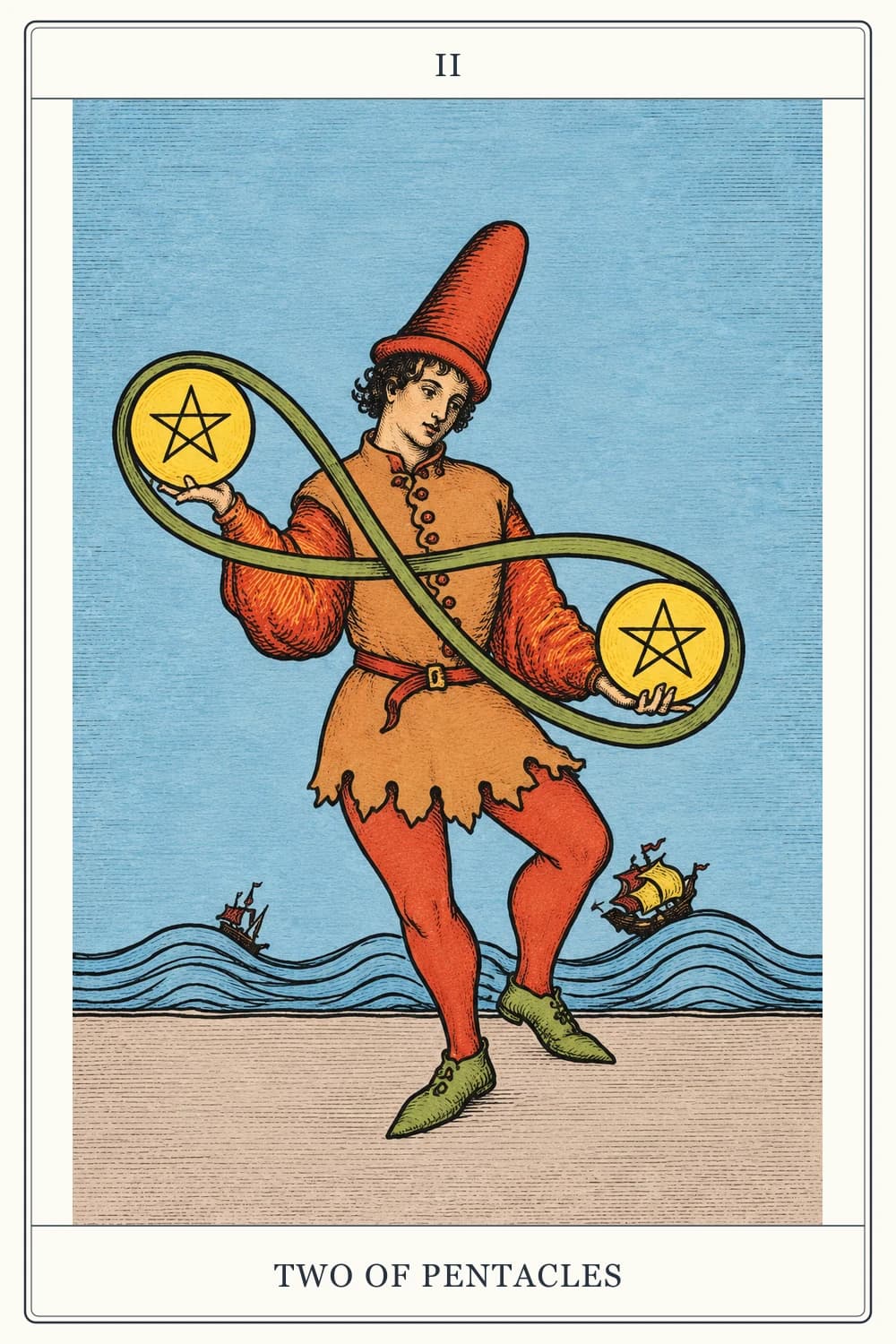
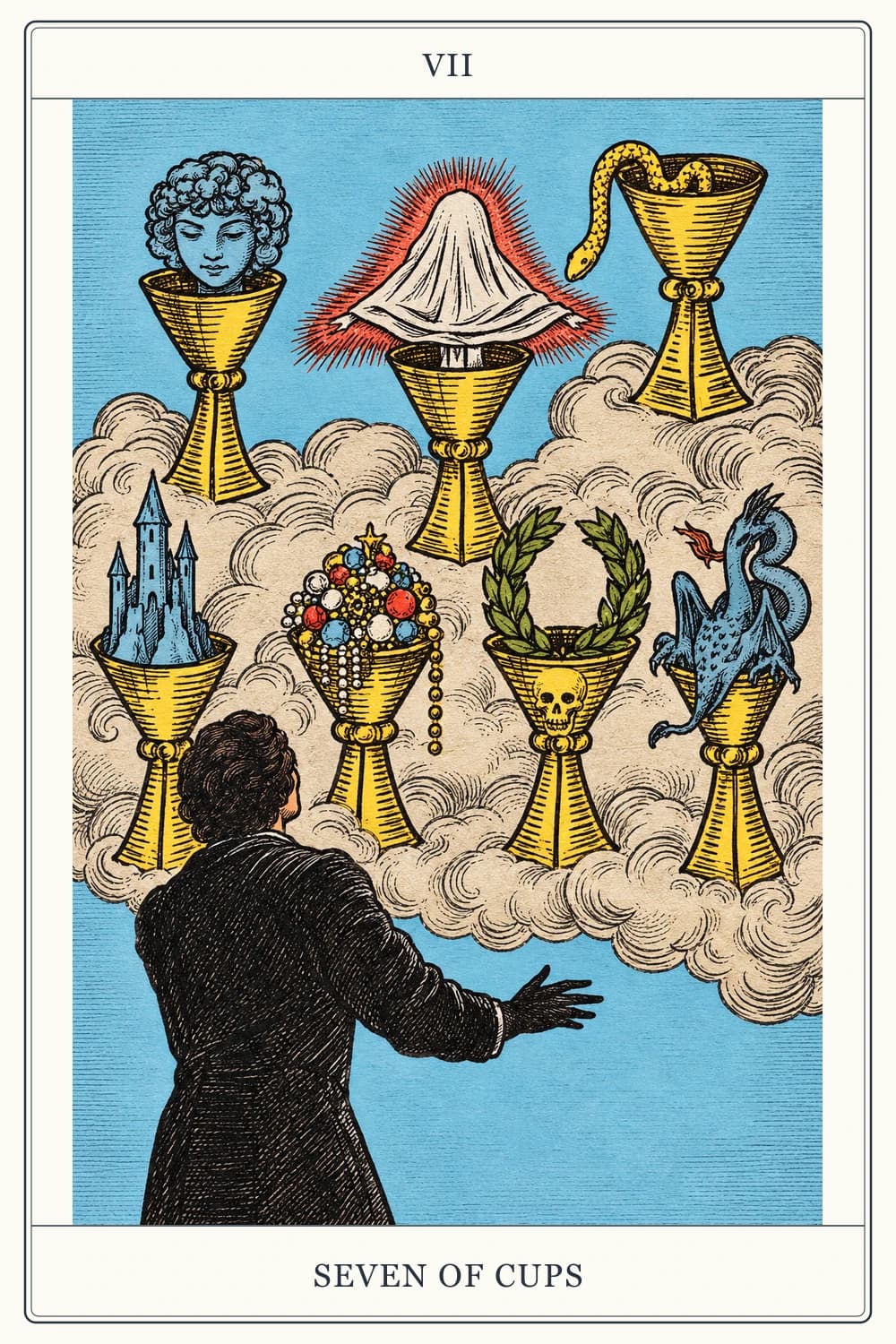
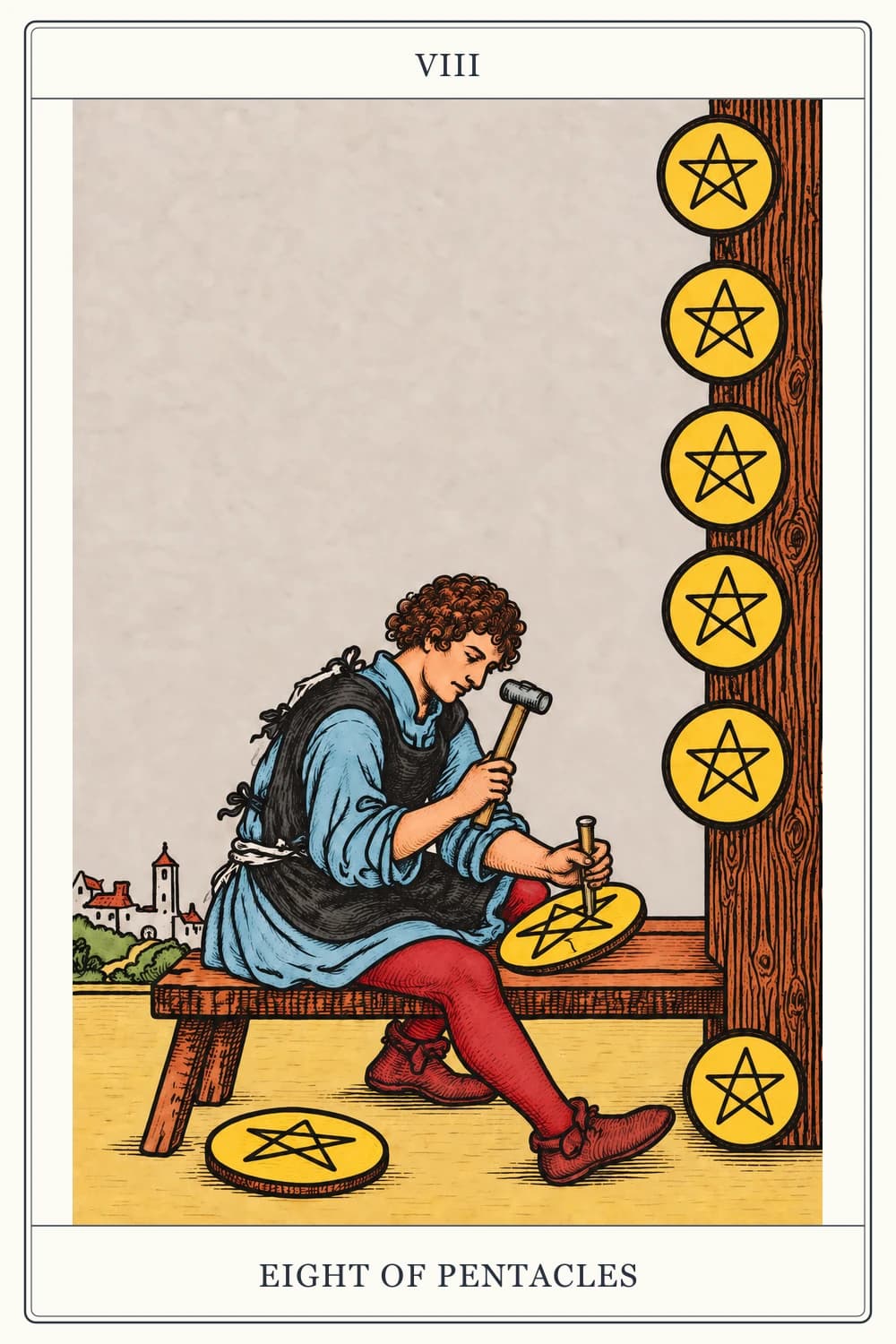
In this invented example, you have twenty minutes before leaving, including five minutes needed to get ready. Your pencil, a clock, a notebook and an unfinished leaf sketch are on the table. You already know a basic shading technique. Three new sketch ideas also appeal to you, and you are still comparing them instead of beginning. The upright cards shown here were selected for teaching, rather than drawn for you.
Question: “What could help me begin today’s drawing practice within the time I have?” Plan up to five minutes for selecting the cards, reading their references and making a short note, eight minutes for shading, two minutes to put things away, and five to get ready. These are practical choices within the twenty-minute limit. They are not timings supplied by the cards; if the reading needs longer, the practice must shrink or wait.
Situation — Two of Pentacles. A figure holds two star-marked discs, called pentacles, inside a looping ribbon; ships ride waves behind. Joan Bunning’s reference associates this card with juggling demands and flexibility. In Situation, that theme fits making room for drawing alongside a fixed departure. The clock establishes the limit; the card gives you a way to consider dividing attention within it.
Obstacle — Seven of Cups. A figure faces seven cups in clouds, containing different things such as a castle, jewels and a snake. Bunning describes multiple options and wishful thinking; Orara’s upright reference also asks what an appealing possibility would involve. Here, the person’s continued comparison of three ideas supports “choosing keeps delaying my start.” The picture alone would not establish indecision. If one idea had already been chosen, you would need another explanation for the delay.
Advice — Eight of Pentacles. A seated craftsperson works on a star-marked disc, with others displayed beside the bench. Bunning emphasises diligence and attention to detail; Orara’s entry includes practice through repetition and feedback. In Advice, a contained use is to shade one outlined leaf on the existing page, using the technique you know. This answers the pull of new projects with a ready task. It does not require finishing the sketch or learning a new technique before leaving.
Turn the three roles into one bounded attempt
A connected interpretation could read: “Drawing has to fit around leaving home; comparing new projects is using that window, so I could practise shading on the leaf already in front of me.” Situation supplies the scheduling context, Obstacle identifies the observed comparison and Advice proposes focused work on an available page.
Try shading the leaf for up to eight minutes after the reading, then put the materials away in the two minutes reserved for that. A complete attempt means you began the planned task and stopped within its window. It does not mean the leaf is fully shaded. At review, check whether you began, what you worked on and whether choosing remained difficult.
Initial note for the selected example: “25 October 2026, morning. Question: What could help me begin today’s drawing practice within the time I have? Two of Pentacles / Situation: divide attention within twenty minutes. Seven of Cups / Obstacle: I am comparing three ideas. Eight of Pentacles / Advice: work on the ready leaf. Upright, chosen teaching cards. Five minutes reading and note, eight shading, two putting away, five getting ready. Later: did I start that leaf, and did choosing still delay me?”
Another possible use of the Seven of Cups is exploring ideas. That could be valuable in a session intended for brainstorming. This question is about beginning drawing now, and the person reports that comparison is delaying it, so the focused response fits better here. If exploring ideas is what you actually want, revise the task and its check rather than calling that activity a failure to draw.
Add the result beside the morning note
Return when the task is over or in the evening. Keep the morning note intact and add what you did before deciding how well the interpretation fitted. Include an observation that limits your conclusion. You do not need to explain the rest of the day through these three cards.
An illustrative later entry: “25 October 2026, evening. The reading and note took five minutes. I began the existing leaf and shaded it for eight, then used two minutes to put things away and five to get ready. I left at the planned time. Once I started, choosing was no longer the difficulty; getting even pencil pressure was. The leaf remains partly shaded. I have not established whether my technique improved.”
This records a start within the available window and a different difficulty noticed during practice. It leaves the improvement question open. Next time, you could use a practice session to examine pencil pressure without assuming that another morning offers the same amount of time.
If an interruption prevented drawing, say so: “I did not make the attempt, so I cannot assess whether this response helped me start.” If the interpretation did not help, record that too. A delayed evening review can use whatever you actually remember; do not fill gaps to make the card themes fit. Opening Clarity setup does not save this worksheet or preload the teaching cards.
A quick journal note
Date / question / available time:
Situation / Obstacle / Advice — cards and orientations:
Known facts → connected interpretation:
One response, stopping time and later check:
Later: what happened / what remains uncertain:
Detailed journal worksheet
Morning three-card worksheet
Date and time of the initial note:
Question about one activity:
Known facts, materials and commitments:
Total window and time reserved for essential tasks:
Time for reading and note; time remaining for an action:
Situation — card, orientation, picture detail and reference theme:
Obstacle — card, orientation, picture detail and evidence of friction:
Advice — card, orientation, picture detail and proposed response:
Connection across the three roles:
Another interpretation and why I chose this one:
Action, stopping time and what counts as an attempt:
When I will review and what I will check:
Later date/time: what I did and observed:
What did not fit, was not tested or is uncertain:
One adjustment to consider:
Practice: keep a commitment when time disappears
Advice has to change when the available conditions change. A smaller action is useful only if there is still time to do it. Keeping a note for later can be a complete response to a morning with no room for practice.
Optional practice
Keep the same question, cards, sketch and materials. The reading and initial note are complete, but an interruption leaves exactly five minutes before you must leave. Getting ready requires all five, and no other practice time is confirmed today. How should you revise the Eight of Pentacles response, and what can you assess tonight?
See one possible answer
Do not fit shading or another note into the five minutes needed to get ready, or promise practice later today. Leave the existing sketch and initial note as they are and get ready. The practice response is deferred until time is actually available. At the later review you can add that no drawing attempt happened because the window disappeared; you cannot judge whether the eight-minute trial would have helped or whether shading improved. The original card themes remain available for study, but they do not create time.
Sources and further reading
External references for these reading methods. Orara created the examples on this page.