Major Arcana: all 22 tarot cards and how to read their themes
The Major Arcana explore themes such as beginnings, choice and change. Find a card in the 22-card reference, or follow the comparisons to see how a broad theme becomes specific to your question.
Start here
Looking up a particular Major Arcana?
Go straight to the numbered reference and open the card’s name for its picture and fuller meanings. To learn how the themes differ, start with the choir comparison below.
Find a card in the 22-card referenceOrara editorial · Updated · Our approach
On this page
What are the Major Arcana?
The Major Arcana are 22 individually named cards in a standard 78-card tarot deck. They include The Fool, Strength and The World. The other 56 cards form the Minor Arcana, arranged in Wands, Cups, Swords and Pentacles.
In Orara’s Rider–Waite–Smith sequence, The Fool is 0 and The World is 21. Strength is VIII (8), and Justice is XI (11); some decks exchange those two numbers. Use the numbering printed on your cards.
One way to study the sequence is the Fool’s Journey, a story of learning and growth. The groups below offer another way in: comparing related themes. You can use a Major to reflect on an ordinary situation without treating it as a life-changing event.
Compare themes in one situation
Suppose you enjoyed a trial session with a community choir and want to return. You have weekly commitments, but the regular rehearsal time hasn’t been announced. Ask: “How am I approaching this choir?”
Use Situation as the position, or job assigned to the card: what deserves attention now? The Star, The Moon and The Sun below are three alternative one-card examples selected for comparison. All are upright, with their pictures the normal way up.
Hope, uncertainty and enjoyment
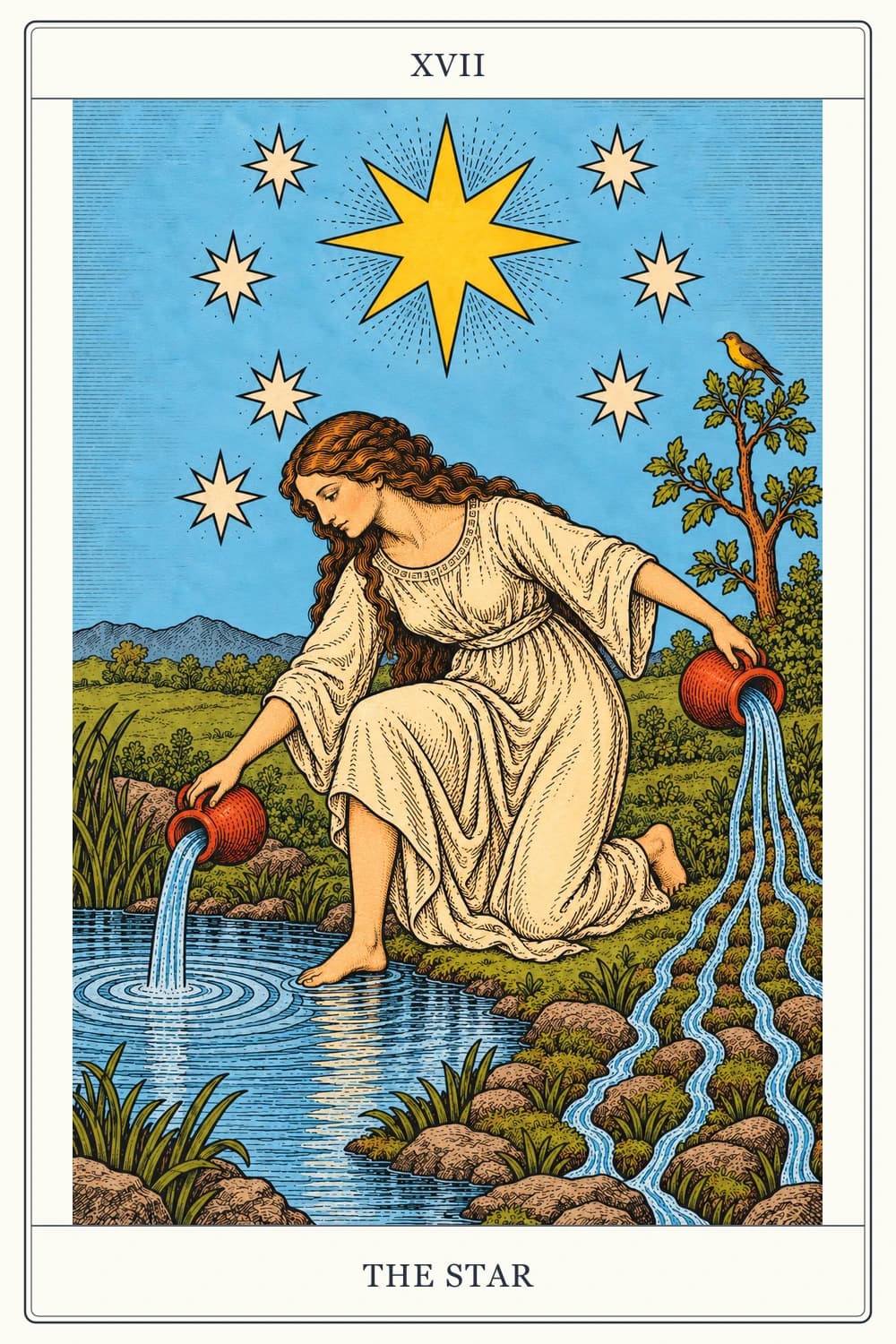
The Star shows a figure pouring water beside a pool, with stars overhead. Its traditional themes include hope and inspiration. In Situation: “The trial has given me something to look forward to.” It draws attention to the singing you want to continue.
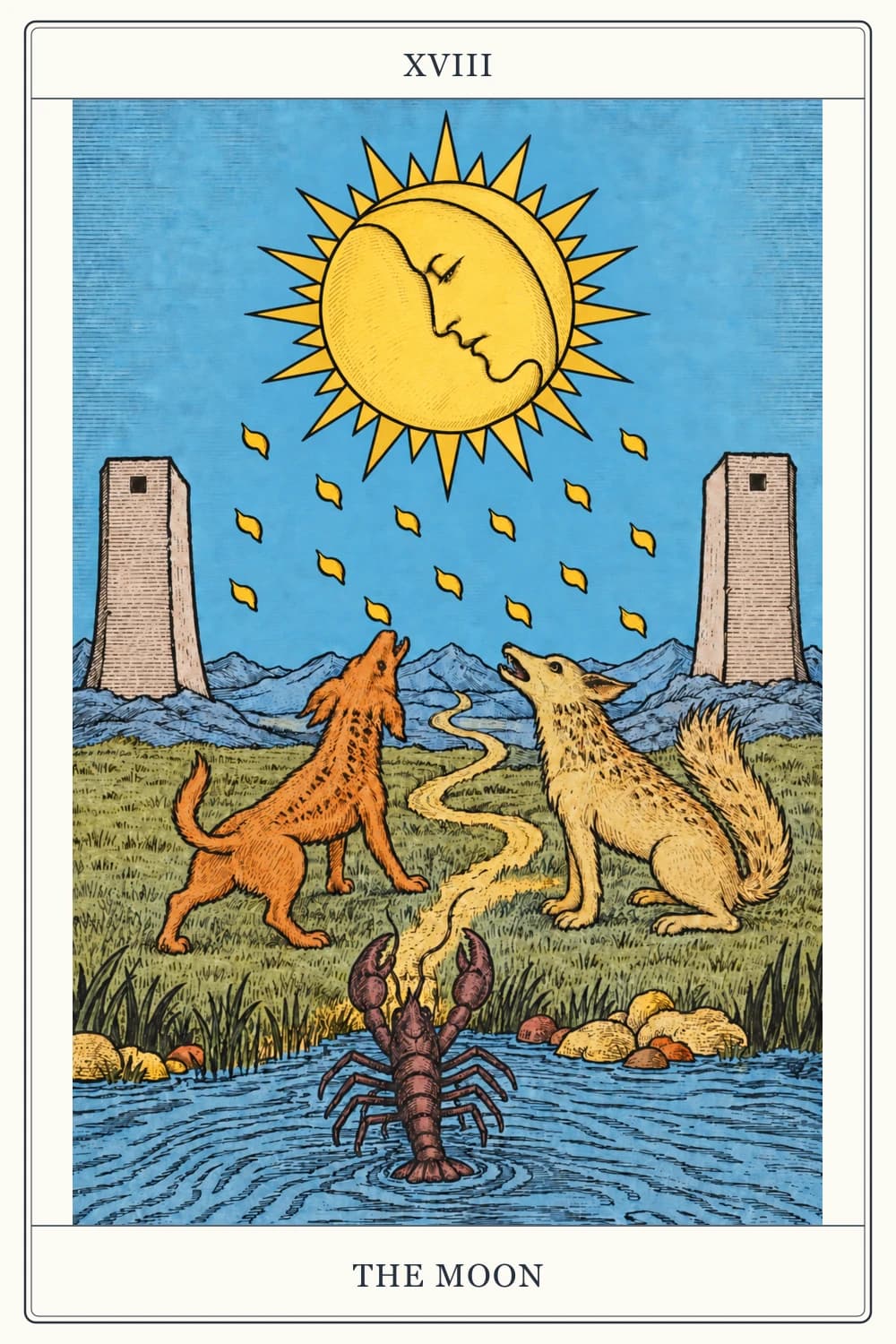
The Moon shows a path between two towers and animals beneath the moon. Its themes include imagination and unclear perception. Here: “I’m imagining life in the choir before knowing whether rehearsals fit.” The missing schedule gives you a reason to check the practical details.
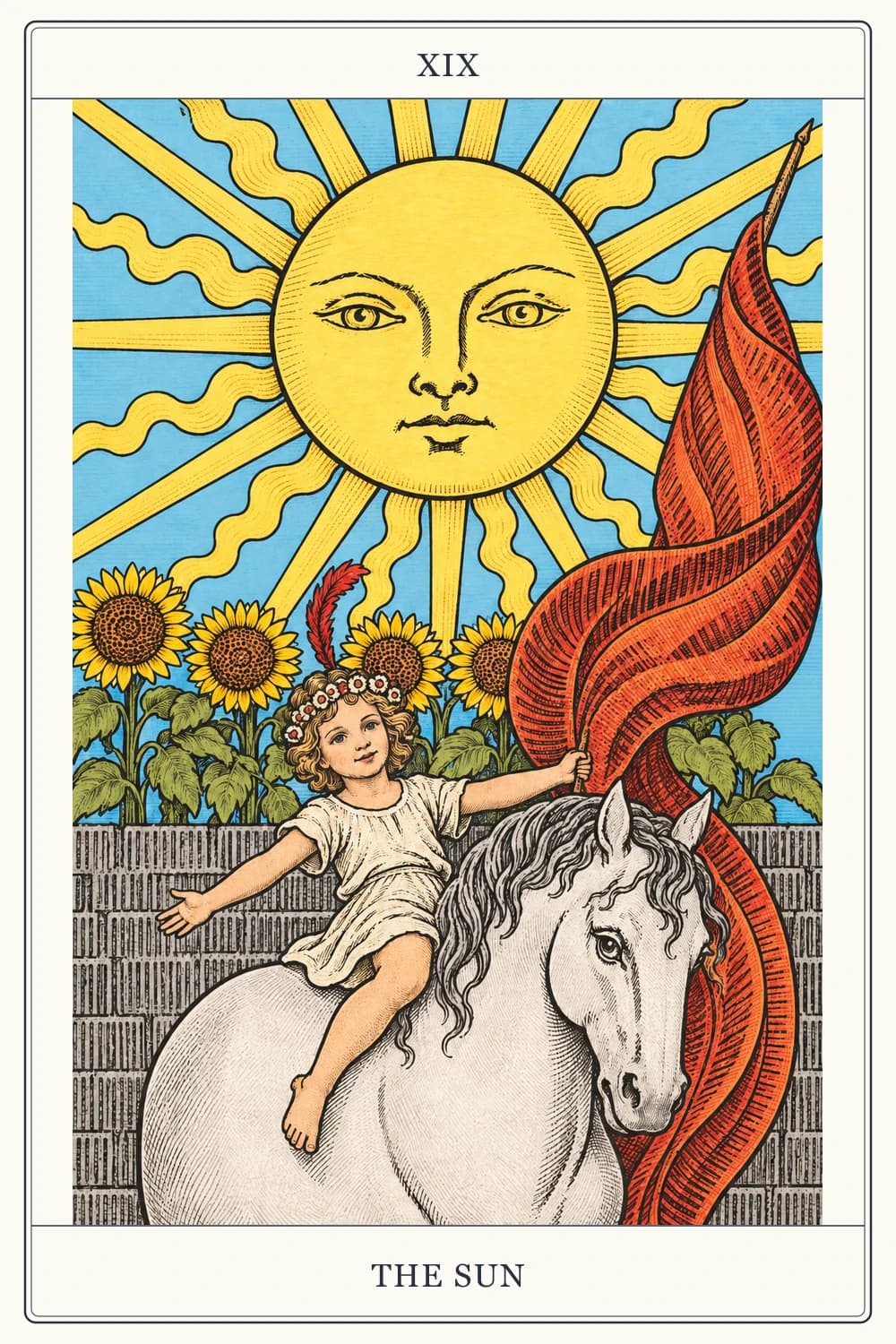
The Sun shows a child on a white horse beneath a large sun. Associated with vitality and joy, it could suggest: “I enjoyed singing with this group.” That experience is already yours, even while future attendance remains undecided.
The same situation supports all three concerns. Hope looks toward continuing; uncertainty points to missing information; enjoyment recognizes what happened. Choose the theme that fits your drawn card and explain its connection, rather than making each card say “join the choir”.
An initial Moon note might read: “My interest is running ahead of the practical information. I’ll ask for the rehearsal time.” Later: “Rehearsals are on Tuesday, when I have a fixed commitment. I can’t attend regularly.” The reply changes what is possible; it doesn’t erase the enjoyable trial.
Judgement and The World help extend this comparison. Judgement can prompt a review of what the experience taught you; The World, recognition that the trial can be a complete experience even if you do not continue.
Beginnings and foundations
The Fool, The Magician and The High Priestess distinguish trying something new, using what you have and making room to observe. Before a first rehearsal, those themes could prompt three different questions: what could I explore, what can I bring, and what would help me listen?
The Empress, The Emperor and The Hierophant concern what sustains an activity: care, structure and teaching. Rest can support tired singers; an agreed time helps people arrive together; instruction helps with an unfamiliar technique. The situation tells you which need is present.
Choice and ways of responding
The Lovers can focus a choice on values or connection: what do you want to honor? The Chariot concerns carrying a direction forward: what effort needs coordinating? Choosing an activity and making room to attend it are related but different tasks.
Strength, The Hermit and Justice offer different approaches to a difficult conversation. Strength can suggest speaking steadily without forcing agreement; The Hermit, taking time to form your view; Justice, weighing facts and consequences fairly. Your question and circumstances help you choose a response.
Change and pressure
Wheel of Fortune, The Hanged Man and Death distinguish changing circumstances, a changed perspective and an ending. If a meeting time moves, you may need to adapt. If the time stays fixed but you expected too much of your week, reconsidering the plan may help. If the activity has ended, acknowledge that ending.
Temperance, The Devil and The Tower invite a comparison of balance, binding habits and disruption. For a crowded week, Temperance might prompt a different mix of commitments; The Devil, a look at why you feel bound to accept every invitation; The Tower, a review of an assumption overturned by new facts. Check which concern actually exists before applying the theme.
When Death or The Tower appears
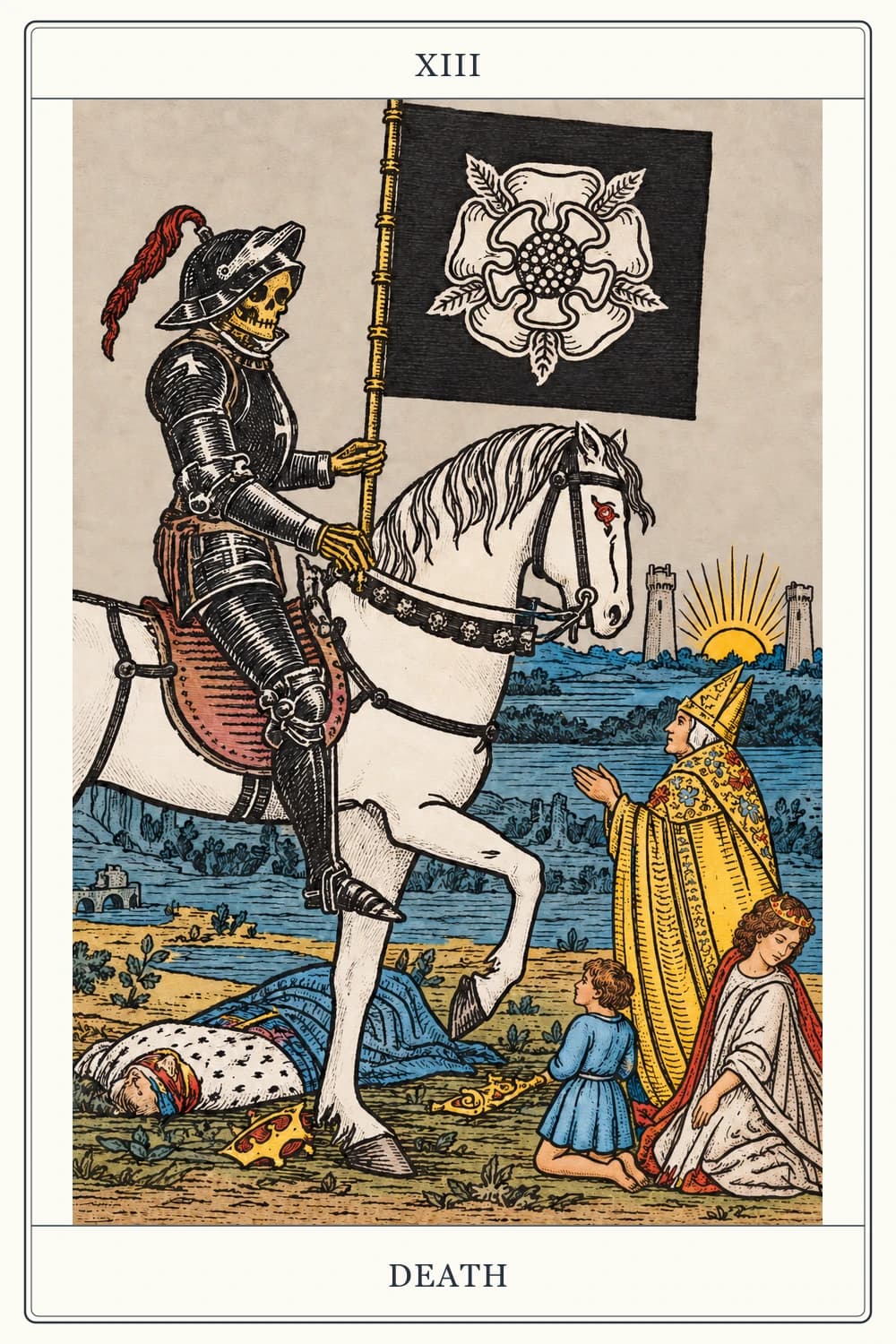
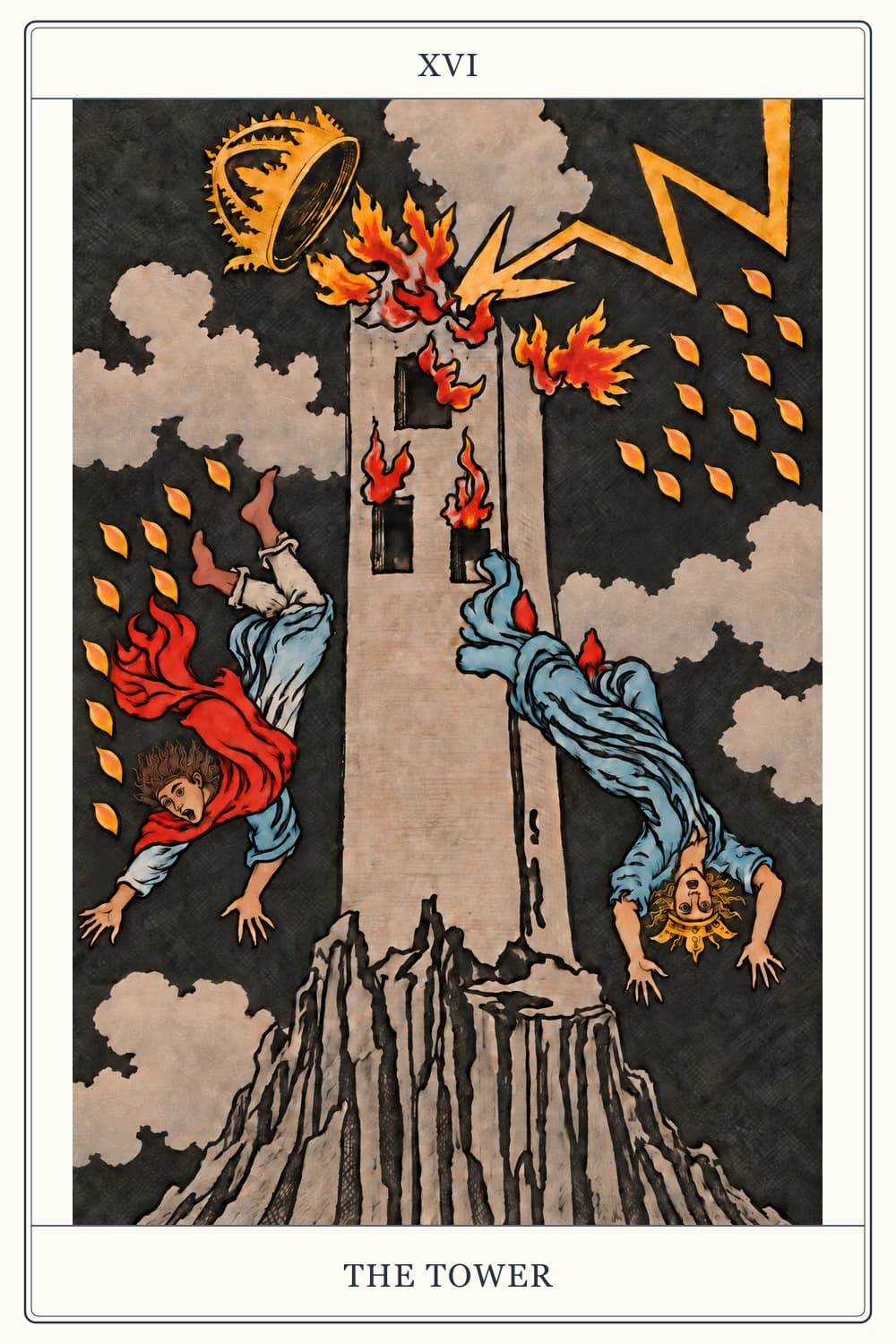
For a separate comparison, suppose an organizer confirms that a workshop venue is unavailable. The handouts are ready and people want to meet, but no replacement room is known. Ask: “What needs attention in our workshop plan?” Read either pictured card in Situation.
Death’s theme of endings could focus on the plan that has ended: the workshop cannot use that venue. The Tower’s theme of disruption could focus on an overturned assumption: the space seemed secure. Both readings begin with the confirmed cancellation.
Tell participants that the venue plan has changed and check for an alternative. The handouts are still useful; another room remains a possibility to investigate. Neither card establishes a literal death, accident or further disaster. If no change is known in your own situation, leave that interpretation open.
Connect a Major and a Minor
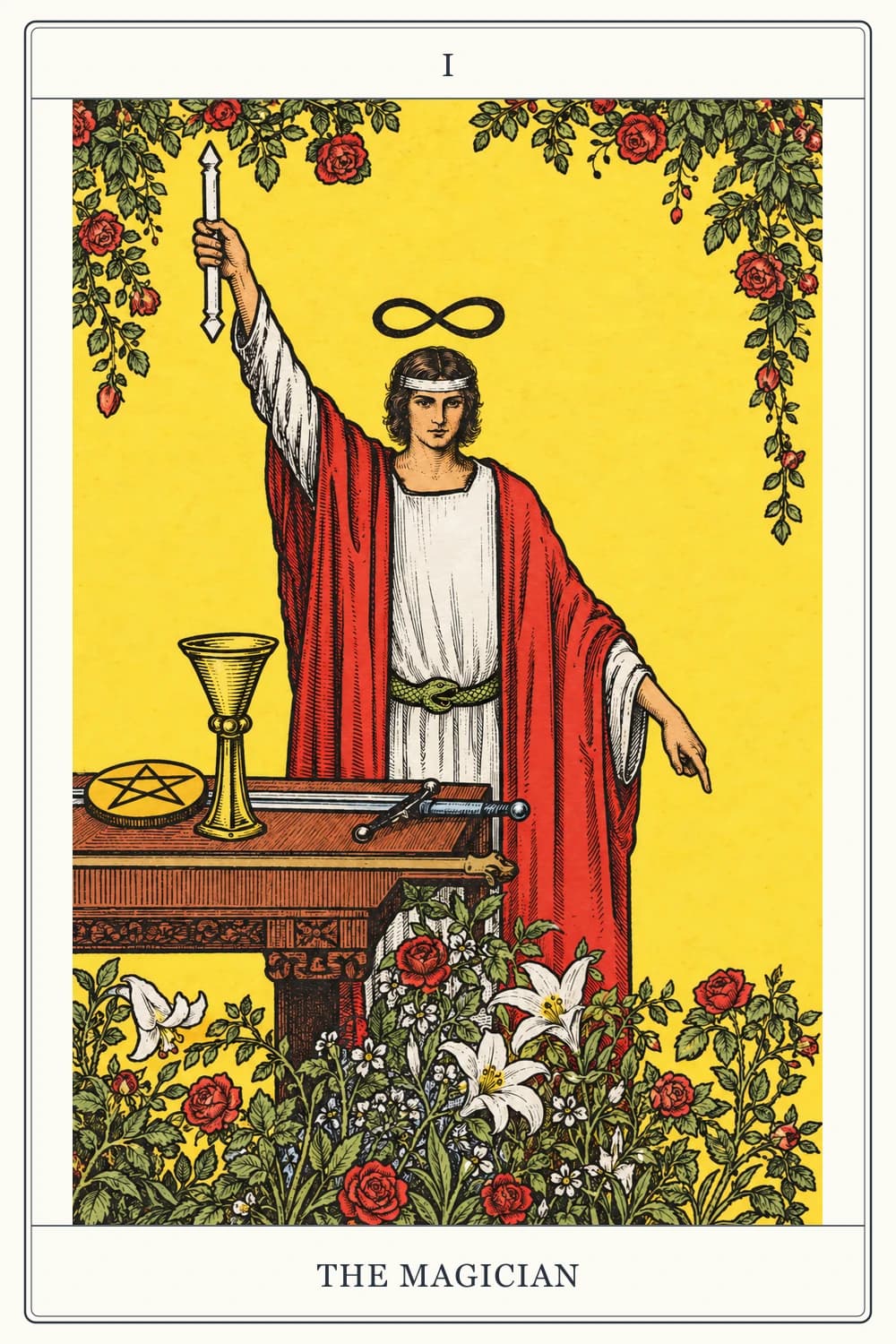
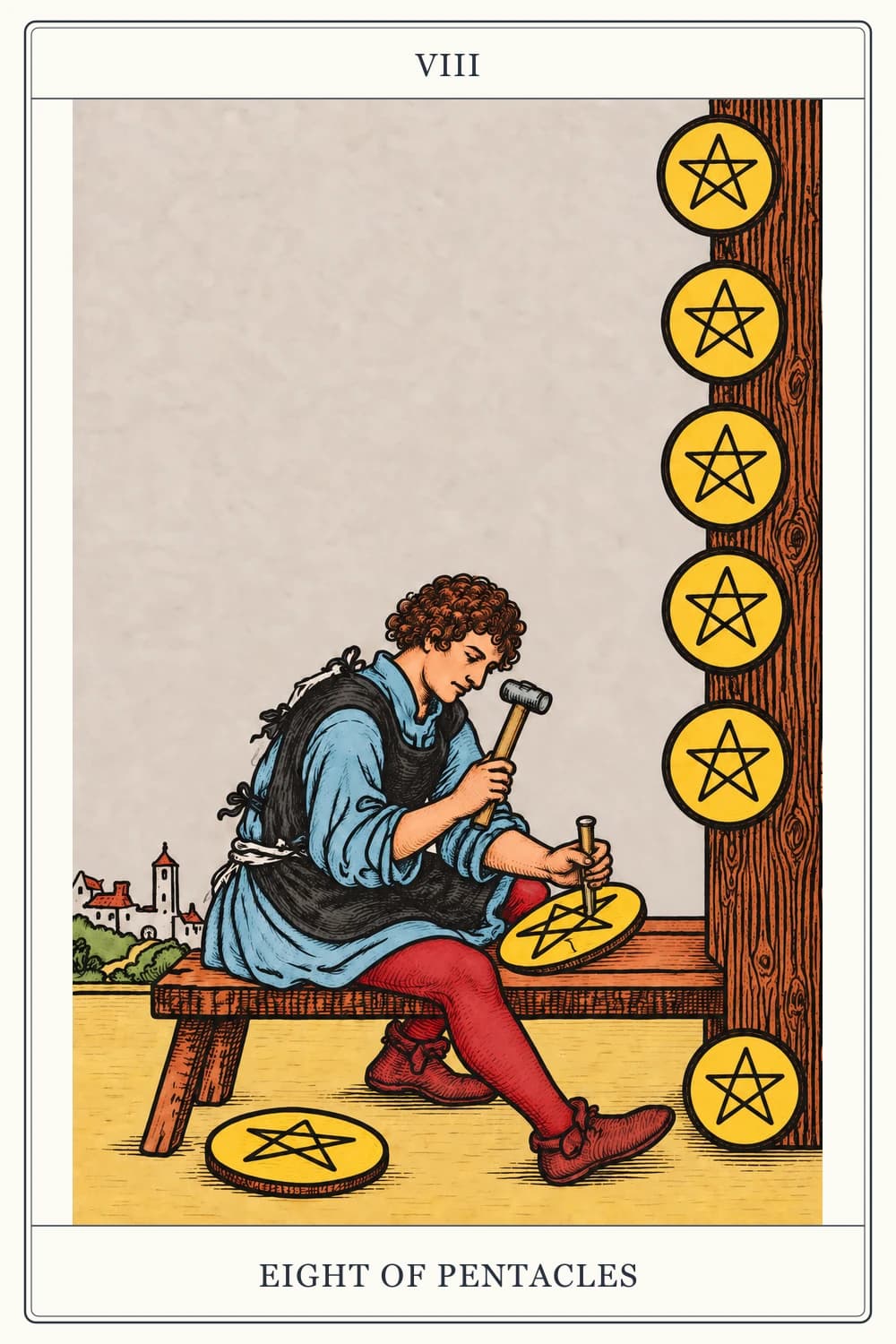
For a study example, ask: “How can I prepare a song I’m learning at home?” You have the lyric sheet, know the tune and have ten minutes, but one verse is unfamiliar. Read The Magician in Situation and Eight of Pentacles in Advice.
The Magician’s table of objects and raised wand suggest using available resources. In Situation: “I have what I need to start.” Eight of Pentacles shows a craftsperson working on a disc; its theme of practice suggests Advice: “Sing the unfamiliar verse slowly and check the words.”
Together: “The materials are ready, so I’ll focus my ten minutes on the unfamiliar verse.” The Major frames the situation; the Minor makes the response specific. Both contribute. Exchanging their positions would change what you ask each card to do.
For more practice, learn to connect two cards through their positions.
All 22 Major Arcana, in order
Use the printed number or name to find a card. Each linked name opens its picture and fuller upright and reversed meanings. A reversed card is upside down; the examples above use upright meanings.
These themes are starting points, with Orara’s own study questions beside them. Pick one card and explain how its theme fits your question and position. Keep the reference open while practising; memorizing the sequence can wait.
For an optional way to choose a pair to study, the birth card calculator shows a calculation from a birth date and links to the corresponding Major Arcana. Use the pair as a reflection prompt.
| Number | Card reference | Theme and study question |
|---|---|---|
| 0 | The Fool | An open beginning. What can I explore, and what should I check first? |
| 1 | The Magician | Resources put to use. Which available skill or tool could I use deliberately? |
| 2 | The High Priestess | Quiet attention. What do I notice when I leave room before responding? |
| 3 | The Empress | Nurturing conditions. What needs care in order to grow? |
| 4 | The Emperor | Structure and responsibility. What boundary or structure would support this task? |
| 5 | The Hierophant | Teaching and tradition. Which shared practice helps, and which deserves questioning? |
| 6 | The Lovers | Values and connection. Which values do I want my choice to honor? |
| 7 | The Chariot | Direction and commitment. How can I direct competing impulses toward one aim? |
| 8 | Strength | Patient courage. What could I meet with steadiness rather than force? |
| 9 | The Hermit | Time for reflection. What could a useful pause help me understand? |
| 10 | Wheel of Fortune | A changing cycle. What is changing, and how can I adjust my response? |
| 11 | Justice | Fair judgment. What facts and consequences should I weigh fairly? |
| 12 | The Hanged Man | A changed perspective. What assumption looks different if I stop pushing? |
| 13 | Death | An ending and transition. What has run its course, and what support should remain? |
| 14 | Temperance | Blending and proportion. What would a sustainable combination look like? |
| 15 | The Devil | A binding pattern. Which habit feels compulsory, and where is there room to choose? |
| 16 | The Tower | A structure challenged. Which assumption is being tested by facts I already know? |
| 17 | The Star | Renewed hope. What small source of confidence is worth tending? |
| 18 | The Moon | Unclear perception. What remains uncertain, and what could I check? |
| 19 | The Sun | Clarity and vitality. What is working visibly and can be enjoyed or supported? |
| 20 | Judgement | Review and response. What does an honest review invite me to do differently? |
| 21 | The World | Integration and completion. What has come together, and what would mark completion? |
Common questions
- Do several Major Arcana mean a major life event is coming?
- Their count does not establish an event or its importance. Some reading traditions give Majors extra weight; in this reflective approach, compare their themes against the question and what you know.
- Why do Strength and Justice have different numbers in some decks?
- Deck traditions use different orders. Orara follows the Rider–Waite–Smith sequence: Strength at VIII (8), Justice at XI (11). Follow your own deck when looking up a card.
Try the short lesson on The Fool, The Magician and The High Priestess. Compare how each approaches a beginning.
Practice: change the position
Keep the later facts: Tuesday’s commitment cannot move, the choir has no other rehearsal time, and you still want to sing. Put The Star in Advice, asking for a response. What could hope support now?
See one possible answer
Acknowledge that the trial renewed your interest in singing, while accepting that this choir’s schedule does not fit. You can keep that interest without deciding the next opportunity. A different rehearsal time or another available choir would be new facts; hope does not supply them.
SourcesJoan Bunning · Learning the Tarot
These references explain the deck and traditional associations used here. The examples and practice questions are Orara’s own.
External references · learntarot.com