A sample Week Ahead reading · All cards upright
See a complete three-card reading
Follow one question through three cards, see how the meanings fit together, and turn the reading into something you can try.
On this page
Start with a situation
Suppose you’re writing a short story. The last two times you sat down to write, you ended up rearranging the outline instead. You still like the idea, but haven’t added anything to the draft. This week, you have time for one writing session.
You decide to explore this question with a three-card reading: ‘What could help me start writing again this week?’
Week Ahead is a three-card spread, or layout: Energy is the approach you bring, Challenge a possible difficulty, and Focus where to put your attention. Here, we use it to explore how to approach the week, rather than predict its events.
In Orara, choose a spread and press Draw to select cards randomly. Let’s suppose you draw The Star, Two of Pentacles and Eight of Pentacles in that order, all upright (the normal way up). This is a hypothetical reading.
Energy — The Star
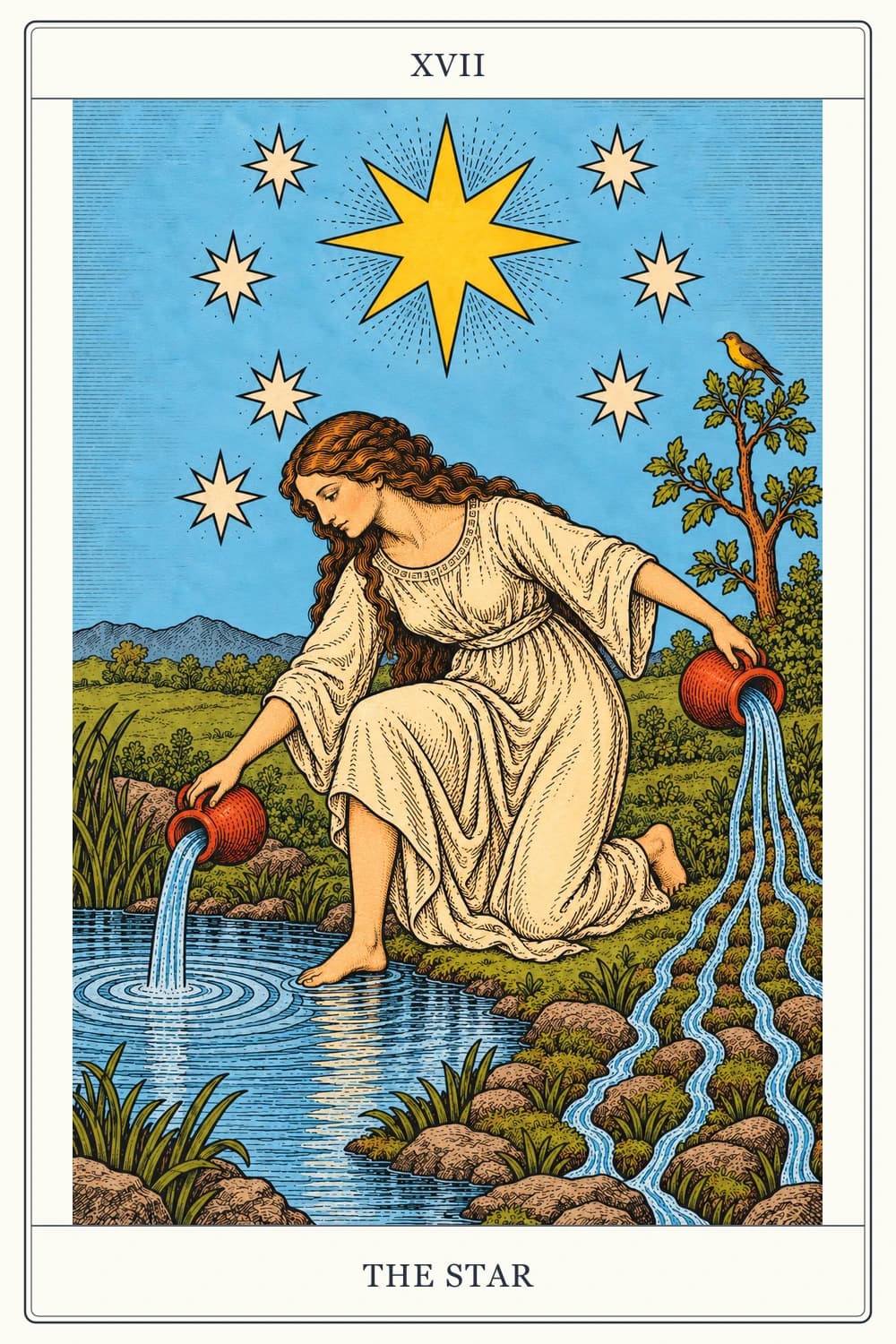
Card meaning The figure pours water into a pool and onto the ground. Traditionally, The Star is linked with hope and inspiration. In Energy, it invites you to ask what still draws you to the story.
Think of a scene you still want to write. What would you like to see the characters say or do? That interest gives you somewhere to begin, even if the rest of the story is still unclear.
Choose a scene you still want to write.
Challenge — Two of Pentacles
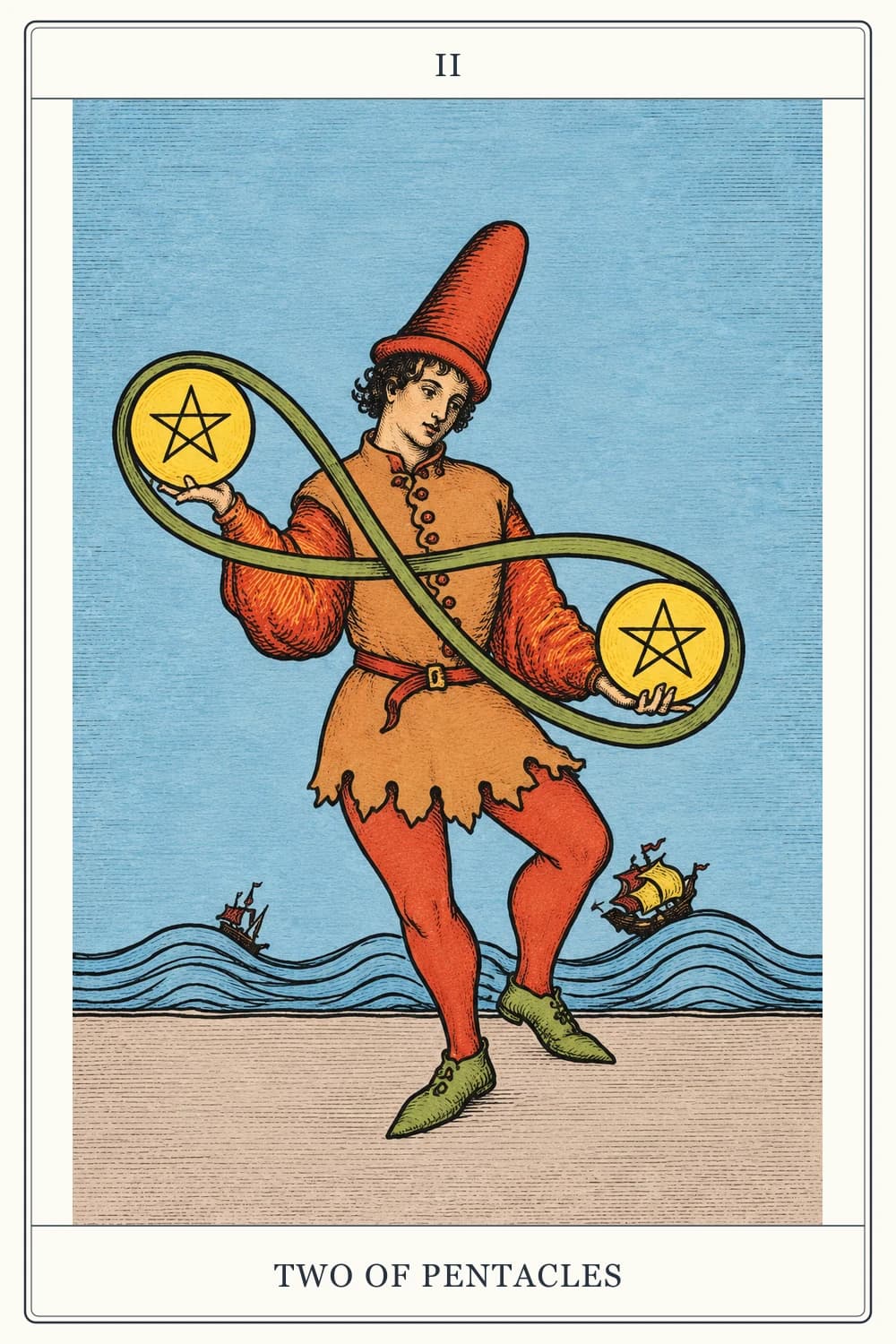
Card meaning Two star-marked discs, called pentacles, sit inside a looping ribbon as the figure juggles them. The card is associated with juggling demands and staying flexible.
In Challenge, ask whether switching between tasks helps you adapt or keeps you circling. Your last two sessions changed the outline without adding to the draft. That makes repeated adjustment worth examining. With competing commitments, this card might instead point to balancing your time.
Notice when adjusting the plan replaces writing.
Focus — Eight of Pentacles
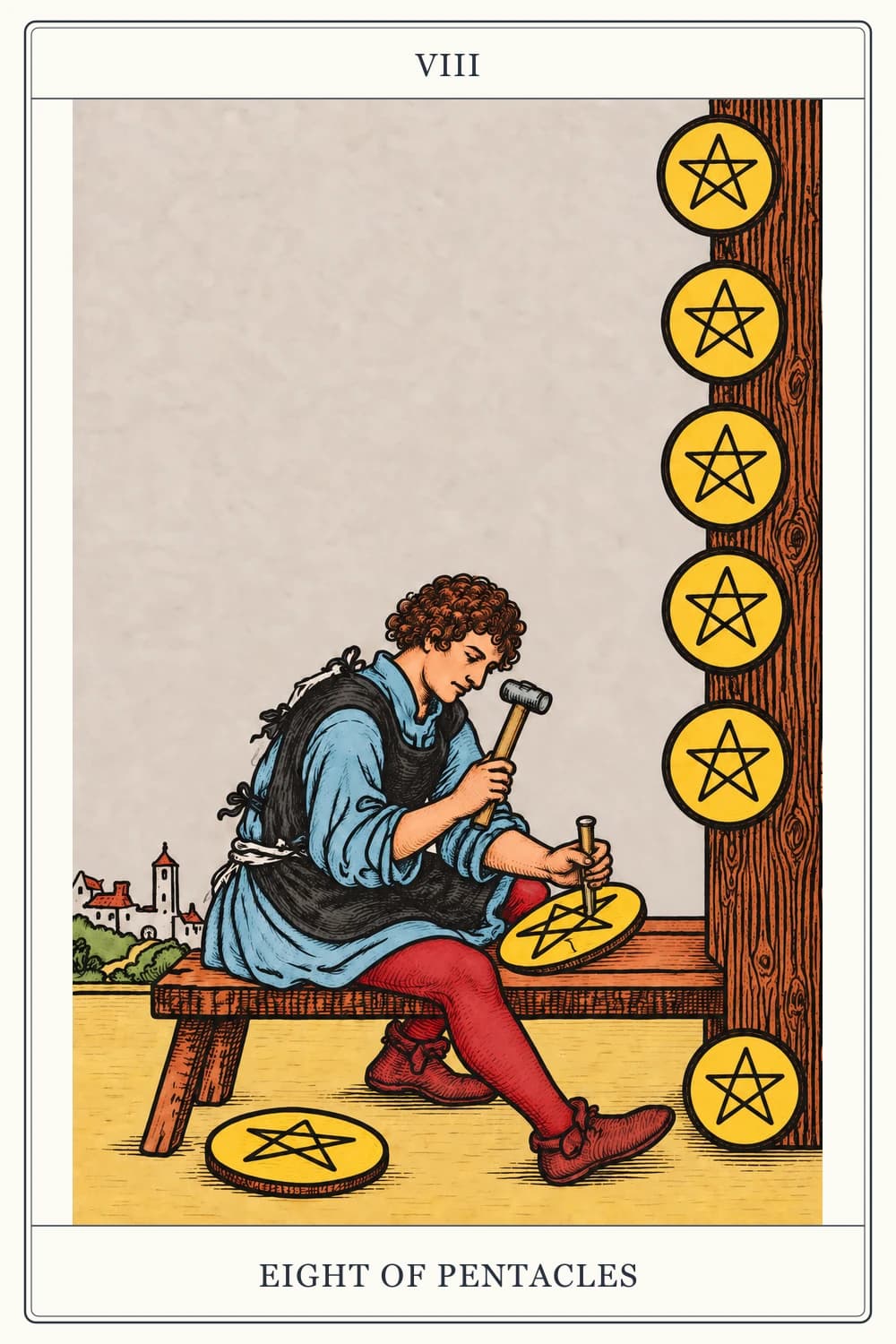
Card meaning A craftsperson works on one pentacle with a hammer and chisel. Others hang nearby. The card’s themes of practice and attention to detail suggest learning through a particular piece of work.
In Focus, try one conversation between two characters. Hearing how they respond may reveal something the outline cannot. Careful planning also fits this card; drafting is useful here because more outline changes have not moved the story forward. If a missing plot detail blocks the scene, work on that detail first.
Learn what the draft needs by writing one exchange.
Connect the three positions
Give each position a part in one thought: a reason to begin, a difficulty to notice, and a response to try.
I still want to write this story, but I keep adjusting the plan, so I’ll draft one conversation and see what I discover about the characters.
| Position and card | What it contributes |
|---|---|
| Energy — The Star | Motivation: a scene I still want to write. |
| Challenge — Two of Pentacles | Friction: switching back to the plan. |
| Focus — Eight of Pentacles | Response: learn by drafting one exchange. |
The ‘but’ connects The Star’s inspiration to the difficulty explored through Two of Pentacles. The ‘so’ turns Eight of Pentacles into a response to that difficulty. A list of keywords—hope, flexibility, practice—would leave those connections unexplained.
The cards helped frame a question to test: does working on a scene teach you more than another outline revision? The writing session will give you something to judge the reading against.
Turn the reading into a small experiment
- Reflect on this
- What could writing a scene show you that planning has not?
- Try this next
- Pick a scene from your outline. Write one exchange between two characters before revising the plan. Leave the wording rough and note one thing you notice about their voices.
Choose a day to look back: what did you learn, and what still needs work? An awkward scene can still reveal a useful difference between the characters.
Keep a note, then look back
For example, you might write your first note on Monday and look back on Sunday.
‘The Star / Energy: start with a scene I want to write. Two of Pentacles / Challenge: notice the planning loop. Eight of Pentacles / Focus: learn by doing. I’ll draft one conversation and review what it shows me on Sunday.’
‘One character sounded distinct; the other felt flat. I kept wanting to edit. Next time I’ll try the exchange from the quieter character’s viewpoint.’
Try your own reading
What would you like to explore this week? Bring a question and the facts you already know, then draw for Energy, Challenge and Focus.
Practice: change the question
Keep Eight of Pentacles in Focus, but change the question: ‘How can I learn to cook a new dish?’ Suggest one practical step. How does it connect the card’s theme of practice to this question?
See one possible answer
Follow a simple recipe once, then note one technique to practise again. This connects learning through hands-on work to cooking. The card’s theme stays the same; the question changes what you practise.
SourcesJoan Bunning · Learning the Tarot
Card associations from Learning the Tarot. Example and journal entries by Orara.
External references · learntarot.com